
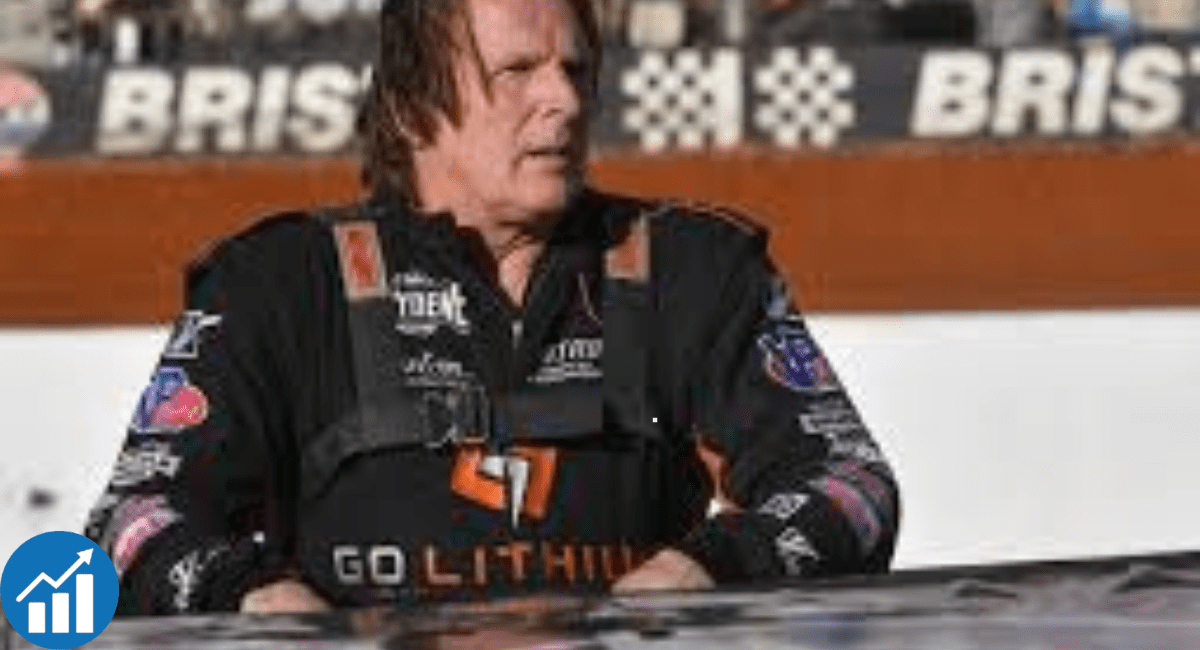
Estimating Scott Bloomquist’s net worth requires stepping away from the idea of a single fixed figure. What exists instead is a layered financial structure built across competitive racing, independent team ownership, and a manufacturing operation that evolved directly from his on-track identity.
Public estimates vary significantly. Some place his wealth in the low tens of millions, while others circulate different figures without transparent methodology. The inconsistency is not incidental. It reflects the absence of audited financial disclosure and the reality that much of his economic activity operated outside formal reporting systems.
Scott Bloomquist Physical Profile
| Attribute | Detail | Notes / Context |
|---|---|---|
| Height | ~5 ft 9 in (≈175–179 cm) | Reported consistently across motorsport and biographical listings; slight variation appears across databases |
| Weight | ~158 lb (≈72 kg) | Typical racing profile weight; relevant for car balance and setup in dirt late model racing |
| Age at Death | 60 years | Born November 14, 1963 – Died August 16, 2024 |
| Body Type | Lean, athletic build | Suited for endurance and vehicle control in high-vibration dirt track conditions |
| Hair Style | Long hair (varied length over career) | Became part of his recognizable racing identity |
| Racing Posture | Low, forward driving stance | Common in dirt late model racing to maintain control under lateral load |
| Physical Conditioning | Motorsport-functional fitness | Emphasis on endurance, reaction control, and sustained concentration rather than bodybuilding-style conditioning |
Why Scott Bloomquist’s Net Worth Is Structurally Hard to Define

The difficulty begins with the architecture of dirt late model racing itself. The sport does not function like salaried leagues or centrally governed motorsport systems. Income is fragmented, conditional, and heavily performance-driven.
Within the competitive ecosystem of the Lucas Oil Late Model Dirt Series and the World of Outlaws, earnings are distributed across race purses, appearance fees, sponsorship arrangements, and equipment support. None of these categories are consolidated into standardized public financial reporting.
Bloomquist operated simultaneously as driver, team owner, and chassis developer. That overlap makes traditional net worth modeling unreliable because revenue streams are not separated in publicly visible accounting structures.
Scott Bloomquist Net Worth (Estimated)
| Category | Value / Range | Notes |
|---|---|---|
| Estimated Net Worth | No publicly verified figure | No audited financial disclosure exists |
| Common Media Estimates | ~Multi-million USD range (varies widely) | Published figures differ significantly across sources |
| Frequently Cited Figure | ~$21 million (unverified) | Circulates in some secondary websites; not supported by primary financial documentation |
| Lower Estimates | Several million USD range | Based primarily on race earnings assumptions |
| Higher Estimates | Mid–tens of millions (rare claims) | Typically include speculative asset valuation |
| Reliability Level | Low–moderate | Due to lack of formal financial reporting or estate disclosure |
Competitive Performance as a Financial Driver
A significant portion of Bloomquist’s earnings originated from high-level competition at venues such as Eldora Speedway, where marquee events like the World 100 and Dirt Late Model Dream shaped both prize earnings and market visibility.
In dirt racing economics, performance does not only determine prize money. It directly influences sponsorship valuation and future earning potential. A sustained record of victories increases negotiating power across every other income channel, particularly in a sport where driver reputation is tightly linked to technical credibility.
The financial reality is that success on track compounds into commercial leverage off track.
Team Zero and the Manufacturing Dimension
A defining element of Bloomquist’s financial profile is the creation of Team Zero Race Cars. This operation extended his influence beyond driving into production and design.
Unlike race winnings, which fluctuate based on results, manufacturing revenue is structurally repeatable. Chassis production introduces a different financial logic based on sales volume, customer teams, and ongoing demand for competitive equipment.
This transition from competitor to manufacturer is central to understanding his wealth. It represents a shift from event-based income to business-driven revenue, where intellectual design and brand reputation become monetizable assets.
Sponsorship Economics and Reputation Value
In dirt racing, sponsorship is not simply financial support. It is a market response to competitive credibility. Drivers who consistently perform at elite levels attract higher-value partnerships because they represent visibility, technical authority, and fan engagement.
Bloomquist occupied a unique position in this ecosystem as both a competitor and a technical reference point. His reputation in chassis setup and engineering experimentation increased his value beyond race results alone.
Within the broader motorsport environment, figures such as Tony Stewart demonstrate how crossover influence from NASCAR into dirt racing reshapes sponsorship expectations. Tony Stewart illustrates how capital and attention from larger racing platforms indirectly elevate the economic ceiling of dirt racing competitors.
Income Structure Beyond Race Winnings
A narrow focus on prize money significantly underestimates Bloomquist’s financial footprint. His earnings likely drew from multiple overlapping channels including competitive purses, sponsorship arrangements, chassis sales, merchandise activity, and team-related business operations.
However, precise breakdowns of each category are not publicly documented in verified financial records. Any exact aggregation would therefore be speculative.
What can be established is structural diversity. His income was not linear or singular but distributed across performance, manufacturing, and brand-driven activity.
Asset-Based Wealth Interpretation
Net worth in cases like Bloomquist’s is heavily influenced by assets rather than liquid income. The most relevant categories include racing vehicles, manufacturing equipment, workshop infrastructure, transport systems, and intangible assets such as design knowledge and brand equity.
In motorsport entrepreneurship, these assets often carry long-term value that exceeds annual earnings, particularly when tied to a recognized competitive identity.
The challenge in valuation arises because many of these assets are privately held and not subject to public financial reporting or disclosure.
Post-2024 Financial Context
Following his death in 2024 in Mooresburg, Tennessee, within the state of Tennessee, Bloomquist’s financial profile transitioned from active income generation to estate-based valuation.
At this stage, net worth becomes an interpretation of accumulated assets, residual business value, and brand equity rather than ongoing earnings. Publicly circulated figures often merge pre-death estimates with speculative assumptions about asset value, which explains continued variation in reported totals.
Why Direct Comparisons Fail
Comparing Bloomquist’s wealth to mainstream entertainment or highly centralized motorsport figures introduces structural distortion. Dirt late model racing operates with fragmented revenue systems and independent team ownership models that do not mirror salary-based sports economies.
Even within motorsport, financial structures differ significantly between independent dirt racing and manufacturer-backed or corporate-funded series. As a result, direct numerical comparison lacks analytical consistency.
What His Financial Profile Actually Represents
Bloomquist’s economic profile is best understood as a self-contained motorsport enterprise rather than a conventional athlete income trajectory. Competitive success generated visibility, visibility increased sponsorship leverage, and sponsorship leverage supported both manufacturing and brand expansion.
That progression forms a closed economic loop where performance, engineering, and business ownership reinforce one another.
Frequently Asked Questions
What was Scott Bloomquist’s net worth?
There is no publicly verified financial disclosure. Estimates vary across sources and are not based on audited financial documentation.
How did Scott Bloomquist earn his money?
His income was derived from race winnings, sponsorship arrangements, chassis manufacturing through Team Zero, and broader motorsport-related business activity.
Was Team Zero important to his wealth?
Yes. Team Zero Race Cars functioned as a manufacturing and competitive extension of his racing identity, creating revenue beyond race results.
Why do net worth estimates differ?
Because dirt racing does not operate under standardized financial reporting systems. Most published figures are approximations rather than verified calculations.
Did racing alone account for his wealth?
No. Competitive earnings contributed, but the broader financial structure included manufacturing operations and brand-driven business activity that expanded his total economic footprint.