
There’s a particular kind of night where typing “I’m fine” feels like the heaviest lie you’ve ever told. You open the chat, your thumb hovers over the keyboard, and nothing in plain English seems big enough for what you’re carrying the silence after a breakup, the ache of missing someone who isn’t coming back, the exhaustion of loving someone who stopped noticing you. This is exactly the gap that Urdu shayari has filled for generations of South Asian hearts. Long before “depressing text messages” became a search term, people were quoting Ghalib at 2 a.m., scribbling Faiz in the margins of letters, and sending two lines of Parveen Shakir instead of paragraphs they couldn’t write themselves.
This post brings that tradition into your inbox. Below you’ll find dard bhari shayari (heart-pain poetry), judai shayari (separation poetry), tanhai shayari (loneliness poetry), and full ghazals written and curated specifically to work as depressing text messages: short enough to copy-paste into WhatsApp, deep enough to make someone pause before they reply, and rooted enough in real Urdu literary tradition that they actually mean something.
Quick answer: Depressing text messages in Urdu shayari are short verses (ashaar) or full poems (nazm/ghazal) in Urdu script and Roman Urdu that express heartbreak, loneliness, betrayal, or grief in a way ordinary text can’t. They’re sent as breakup messages, missing-you texts, goodbye texts, or sad WhatsApp/Instagram captions when someone needs the emotion to land harder than plain words allow.
Why Shayari Says What Text Messages Can’t
Urdu shayari was built for exactly this moment the moment between feeling something and finding the words for it. A sher (couplet) compresses an entire emotional experience into two lines using meter, metaphor, and restraint. That’s why a single ashaar can hit harder than three paragraphs of explanation: it doesn’t describe the pain, it performs it.
When you send someone a shayari instead of a typed-out explanation, you’re doing something culturally specific you’re trusting a shared literary language (shared across Pakistan, India, and the diaspora) to carry feeling that direct prose would make sound either too dramatic or too flat. This is also why these verses work so naturally as depressing text messages, sad WhatsApp status updates, and heartbreaking Instagram captions: they were never meant to be read once and forgotten. They were built to be repeated, quoted, and sent.
1. Dard Bhari Shayari – Heartbreak & Emotional Pain Texts
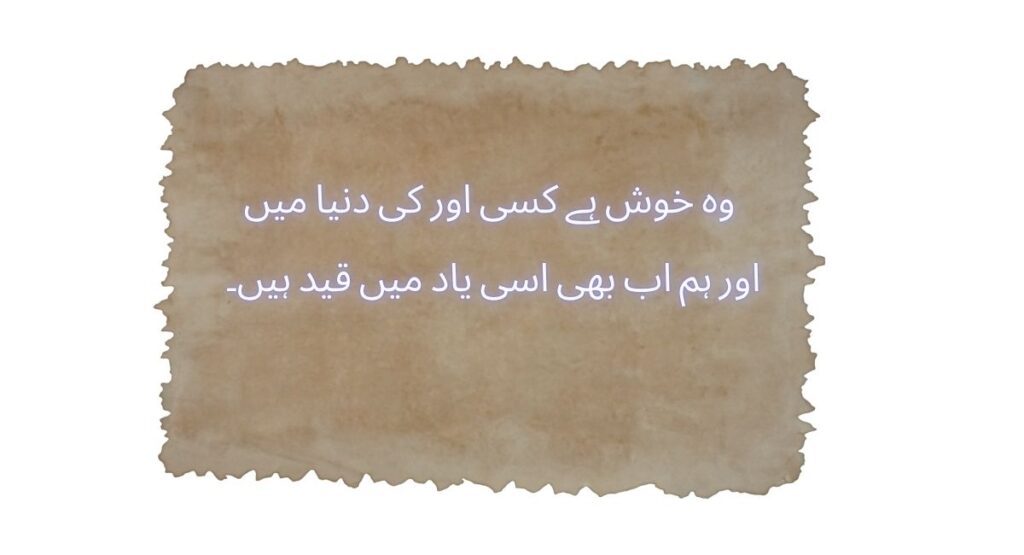
Use these when plain words feel too small for what you’re feeling when someone asks “what’s wrong” and the honest answer is a wound, not a sentence.
Two-Line Heartbreak Ashaar (Copy-Paste Ready)
دل کے زخموں کو چھپا کر مسکراتے ہیں ہم کوئی پوچھے حال تو بس “ٹھیک ہوں” کہتے ہیں ہم
Dil ke zakhmon ko chhupa kar muskuraate hain hum Koi pooche haal to bas “theek hoon” kehte hain hum
(We smile while hiding the wounds of the heart if anyone asks, we just say “I’m fine.”)
ٹوٹا ہوا دل بھی کیا خوب اداکار ہے ہنستا ہے سب کے سامنے، روتا ہے تنہا یار ہے
Toota hua dil bhi kya khoob adakaar hai Hansta hai sab ke saamne, rota hai tanha yaar hai
(A broken heart is quite the actor it laughs in front of everyone, but cries alone.)
کسی کو کیا بتائیں دل پر کیا گزر گئی خود ہی ہنسے، خود ہی روئے، بات وہیں ٹھہر گئی
Kisi ko kya bataayein dil par kya guzar gayi Khud hi hanse, khud hi roye, baat wahin thehar gayi
(How do I tell anyone what my heart has been through I laughed alone, cried alone, and the story stayed unspoken.)
Long Dard Bhari Paragraph (For Him / For Her)
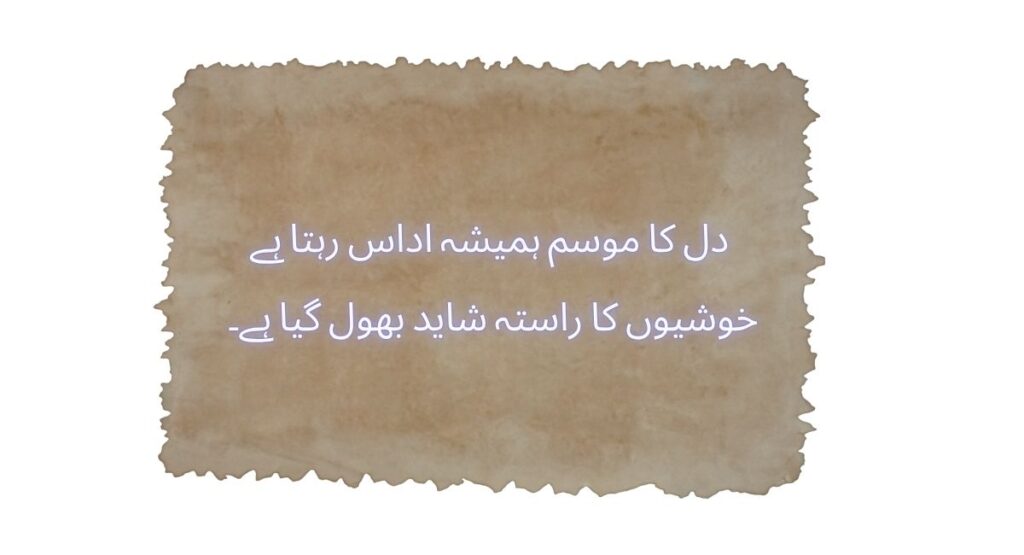
“Tum se baat karte hue lagta tha jaise saans lena aasan hai. Ab har sentence se pehle sochna padta hai ke kya yeh sahi waqt hai, kya tum sun rahe ho, kya tumhe farq padta hai. Dard yeh nahi ke tum nahi ho dard yeh hai ke tum the, aur main ab bhi tumhare hone ki aadat se nahi nikla.”
(Talking to you used to feel as easy as breathing. Now I have to think before every sentence is this the right time, are you even listening, does it matter to you anymore. The pain isn’t that you’re gone it’s that you were here, and I still haven’t broken the habit of you.)
2. Judai Shayari Breakup & Separation Text Messages
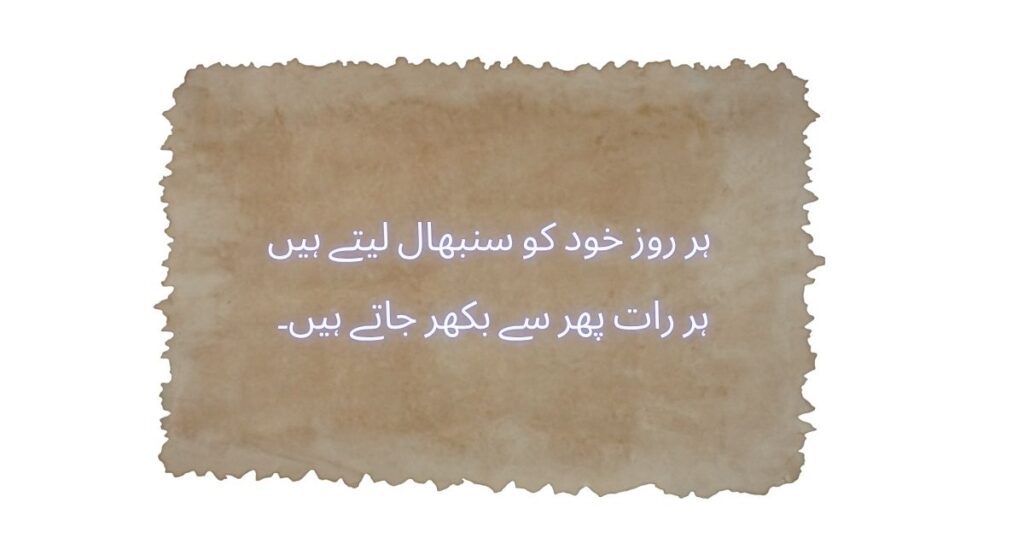
Judai (separation) is its own genre in Urdu poetry distinct from simple heartbreak because it’s about the specific moment of letting go, not just the aftermath.
Breakup Ashaar (Two-Line)
الوداع کہنا بھی ایک ہنر ہے دوست ٹوٹے دل سے مسکرا کر رخصت کرنا فن ہے
Alvida kehna bhi ek hunar hai dost Toote dil se muskura kar rukhsat karna fan hai
(Saying goodbye is also an art, my friend smiling with a broken heart while letting someone go is a skill.)
جس راہ پر ہم ساتھ چلے تھے کبھی اب اس راہ پر تنہا چلنا پڑتا ہے
Jis raah par hum saath chale the kabhi Ab us raah par tanha chalna padta hai
(The path we once walked together now I walk it alone.)
Goodbye Text Message (Full Verse)
“Tumhare jaane ka gham nahi, gham yeh hai ke ab tumhare bina jeena seekhna padega. Alvida kehna asaan nahi hota, lekin kabhi kabhi mohabbat ka sabse bada sabit yeh hota hai ke aap kisi ko jaane do.”
(I don’t grieve that you’re leaving — I grieve that I now have to learn how to live without you. Saying goodbye is never easy, but sometimes the truest proof of love is letting someone go.)
Famous Judai Sher (Cited Tradition)
One of the most quoted separation couplets in Urdu literature is Mirza Ghalib’s reflection on distance and longing — readers across generations have turned to his ashaar precisely because they articulate the waiting inside separation, not just the loss itself. If you’re searching deeper into this tradition, Ghalib’s diwan remains the starting point for understanding judai as a literary theme rather than just a personal feeling.
3. Tanhai Shayari – Loneliness & Missing Someone Texts
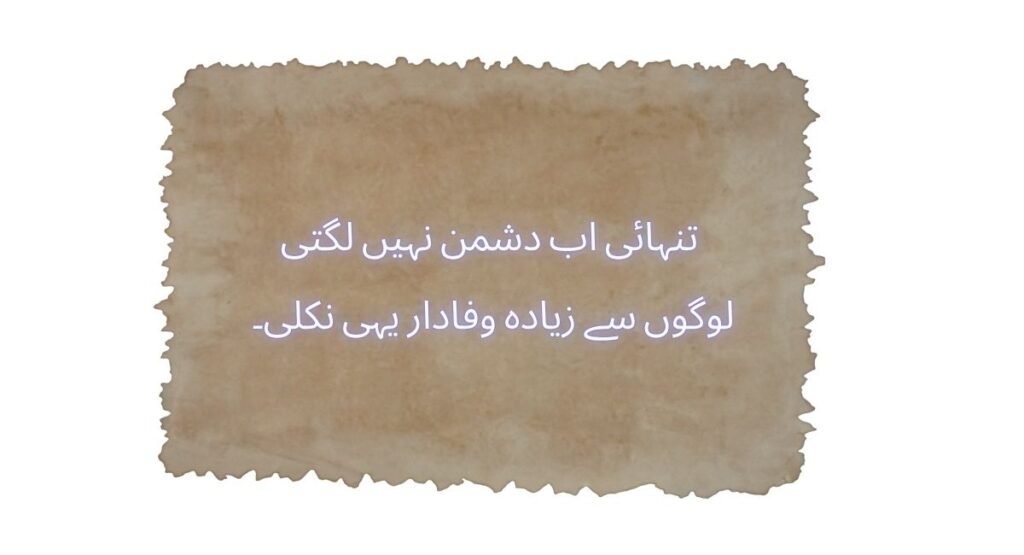
Tanhai (solitude/loneliness) shayari speaks to the specific ache of empty rooms and unanswered messages perfect for “missing you” or “feeling alone” texts.
Two-Line Tanhai Ashaar
رات گہری ہے اور خیال تمہارا بھی نیند آنکھوں سے کوسوں دور ہے یارا بھی
Raat gehri hai aur khayal tumhara bhi Neend aankhon se koson door hai yaara bhi
(The night is deep, and so are thoughts of you sleep is miles away from my eyes too, my friend.)
خالی کمرہ، خالی دل، خالی شام یہ کسی کی یاد میں گزرتی ہے ہر رات یہ
Khaali kamra, khaali dil, khaali shaam yeh Kisi ki yaad mein guzarti hai har raat yeh
(Empty room, empty heart, empty evening every night passes lost in someone’s memory.)
“Missing You” Long Text
“Pata nahi tum yeh message kab padhoge, ya padhoge bhi ya nahi lekin aaj phir tumhari yaad ne raat chheen li. Tanhai mein sab se zyada jo cheez yaad aati hai, woh tumhari awaaz hai. Kaash itni door na hote.”
(I don’t know when you’ll read this, or if you ever will but tonight, your memory stole my sleep again. In this loneliness, what I miss most is your voice. I wish we weren’t this far apart.)
4. Betrayal & Trust-Broken Shayari
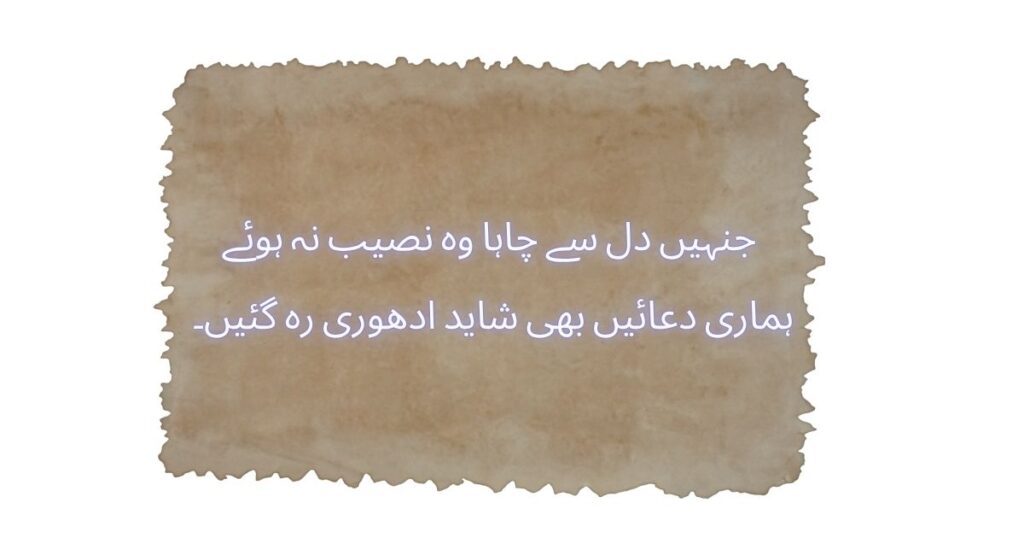
For when the pain isn’t separation but someone choosing to hurt you while still standing in front of you.
1. جس پر بھروسہ کیا، اسی نے توڑا وفا کی امید تھی، دھوکہ ہی پایا
Jis par bharosa kiya, usi ne toda Wafa ki ummeed thi, dhoka hi paaya
(The one I trusted is the one who broke it I hoped for loyalty, and found only betrayal.)
2. سچ بولنے کا حوصلہ تھا، جھوٹ کا نہیں دھوکہ دینے والے کبھی شرماتے نہیں
Sach bolne ka hausla tha, jhoot ka nahin Dhoka dene waale kabhi sharmaate nahin
(I had the courage to speak the truth, not to lie those who deceive never feel shame.)
5. A Full Ghazal Excerpt for Deep Emotional Texts
For readers who want more than a couplet a few she’r from a classic-style ghazal on heartbreak, suitable for longer captions or letters.
غمِ دل بھی کیا شے ہے، چپکے چپکے بڑھتا ہے سینے میں رہ کر بھی، آنکھوں سے بہتا ہے
ہر شام ڈھلتی ہے یادوں کی پرچھائیں لے کر دل کہتا ہے رک جا، وقت مگر چلتا ہے
ہم نے تو چاہا تھا ساتھ رہیں ہمیشہ قسمت کا فیصلہ کچھ اور ہی نکلتا ہے
*Gham-e-dil bhi kya shay hai, chupke chupke badhta hai Seene mein reh kar bhi, aankhon se behta hai
Har shaam dhalti hai yaadon ki parchhayein le kar Dil kehta hai ruk ja, waqt magar chalta hai
Hum ne to chaaha tha saath rahein hamesha Qismat ka faisla kuch aur hi nikalta hai*
(What a strange thing heartache is — it grows quietly, and even while living in the chest, it flows out through the eyes. Every evening sets carrying the shadow of memories; the heart says “stay,” but time moves on regardless. We wished to stay together forever fate decided otherwise.)
How to Use This Shayari as Depressing Text Messages
| Situation | Best Type of Shayari | Where to Send It |
|---|---|---|
| After a breakup | Judai shayari, goodbye verses | Final text, farewell message |
| Missing an ex or distant partner | Tanhai shayari, “I miss you” verses | WhatsApp DM, late-night text |
| Feeling betrayed or cheated on | Trust-broken ashaar | Private message, never public callouts |
| General sadness / hard day | Dard bhari shayari (2-line) | WhatsApp status, Instagram caption |
| Wanting depth without explaining yourself | Full ghazal excerpt | Long paragraph text, personal letter |
| Public sharing | Two-line ashaar only | Instagram caption, Facebook status, bio |
A few practical notes: keep ghazal excerpts and longer paragraphs for private, one-on-one messages they read as personal and vulnerable. Two-line ashaar travel better as public captions because they’re punchy enough to stand alone. And if you’re sending something to an ex or someone you’re not currently speaking to, choose verses about your own feeling rather than ones that blame or guilt the other person shayari is at its most powerful when it’s honest, not weaponized.
A Note on Why Certain Lines Hit Harder
What makes a sher like “hansta hai sab ke saamne, rota hai tanha yaar hai” land so hard isn’t just the sadness in it it’s the contrast (tazaad) between the public smile and the private tears, built into a single line. That contrast is a classic device in Urdu poetry, and it’s also exactly how most people actually experience heartbreak: performing okay-ness while falling apart privately. When you send a verse like this instead of saying “I’m sad,” you’re not just expressing an emotion you’re handing the other person a mirror of an experience they’ve probably also lived.
Similarly, Ghalib-style lines about waiting and unanswered longing work because they don’t resolve. They sit in the unresolved ache rather than rushing toward closure which is often truer to how separation actually feels than any neatly-worded text message could be.
Explore More Poetry
- Sad Poetry in Urdu
- Love Poetry in Urdu
- Alone / Tanhai Poetry
- Emotional Urdu Quotes
- 2 Line Urdu Poetry Collection
The Poets Behind This Tradition
A little context deepens how these verses land:
- Mirza Ghalib — the most quoted name in Urdu heartbreak poetry, known for philosophical, often painfully self-aware reflections on love and loss.
- Faiz Ahmed Faiz — blended personal longing with broader themes of separation and time passing, making his verses feel both intimate and universal.
- Parveen Shakir — gave heartbreak and longing a distinctly feminine, modern voice; widely quoted by younger readers for her directness.
- Mir Taqi Mir — one of the earliest masters of dard bhari shayari, often credited with shaping how Urdu poetry expresses suffering with restraint rather than melodrama.
You don’t need to be a literature student to feel these poets that’s the point. Their verses were written to be used, not just studied.
FAQs
What are depressing text messages in Urdu shayari? They’re short Urdu couplets (ashaar) or longer poems that express sadness, heartbreak, separation, or loneliness sent as text messages, captions, or statuses when ordinary words feel insufficient for the emotion.
Can I send shayari as a breakup text? Yes judai (separation) shayari is specifically suited for this. Choose verses that express your own feeling rather than blame, especially if you want the message to be received with dignity rather than read as an attack.
Is it okay to use shayari for Instagram captions? Absolutely two-line ashaar are widely used as captions and WhatsApp statuses precisely because they’re short, emotionally dense, and easy to read in one breath.
Do I need to know Urdu script to use these verses? No. Each verse here is given in both Urdu script and Roman Urdu (with English meaning), so you can read, copy, and send whichever version suits you and the recipient.
Why does shayari feel more powerful than just texting “I’m sad”? Because shayari uses meter, metaphor, and contrast to show an emotion rather than simply state it which is why a two-line sher can feel heavier than a full paragraph of plain explanation.
Note: These verses are meant for emotional expression and creative inspiration. If you or someone you know is dealing with ongoing emotional distress or difficult thoughts, please consider reaching out to a trusted person or a mental health professional shayari can express pain beautifully, but it isn’t a substitute for real support.
Closing Thought
There’s a reason this tradition has outlived every generation that’s reached for it at 2 a.m. shayari doesn’t ask you to explain your heartbreak, it lets you hand someone a verse and say, this is what I can’t say myself. Whether you’re sending a goodbye text, a missing-you message, or just need two lines for your WhatsApp status tonight, may these words carry what your own couldn’t. And if one of these verses finds its way into your next message, that’s exactly what it was written for go ahead and share it.