

If you’re wondering how to increase your net worth, it comes down to one relationship: what you own versus what you owe. Net worth grows when assets rise and liabilities fall so the fastest path forward is usually a mix of earning more, spending less, paying down expensive debt, and investing the difference consistently.
That’s the whole framework. The rest of this guide breaks it into ten practical moves you can actually act on.
What Is Net Worth?
Net worth is what you’d have left if you sold everything you own and paid off everything you owe. The formula is simple:
Total Assets − Total Liabilities = Net Worth
Assets include cash, investments, retirement accounts, real estate, and business ownership. Liabilities include your mortgage, credit card balances, and any other loans. Tracking this number over time through a simple annual or quarterly financial statement tells you more about your financial health than your salary does. Someone earning six figures can have a low net worth if debt outpaces assets, while a moderate earner who saves and invests consistently can build substantial wealth over time.
What counts as an asset: cash, savings accounts, stocks, bonds, real estate, retirement accounts, and business equity. Some of these appreciate real estate and stocks, for example which is where most long-term net worth growth actually comes from.
What counts as a liability: your mortgage, credit card debt, personal loans, student loans, and auto loans. High-interest debt is the most damaging category, since interest charges eat into money that could otherwise go toward saving or investing.
1. Increase Your Income

Cutting expenses has a floor you can only spend zero but income has no ceiling. Start with what you already have: document measurable results at work and use them to negotiate a raise or position yourself for a promotion. Research market rates for your role so the ask is backed by evidence, not just tenure.
If growth at your current job is limited, build a second income stream through freelancing, consulting, or a side business. The point isn’t just to earn more it’s to direct that extra income toward savings and debt reduction rather than letting it quietly upgrade your lifestyle.
Investing in high-demand skills (especially technical and specialized ones) tends to compound your earning power over a career in a way that’s hard to replicate through side hustles alone. Pick one area to go deep in rather than spreading yourself thin.
2. Increase Your Savings Rate
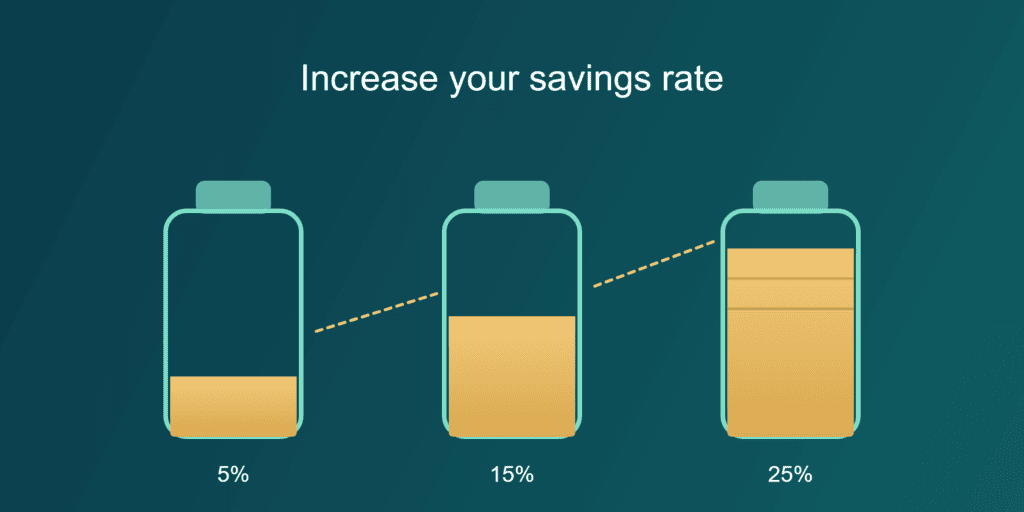
Review your income and expenses to see where money actually goes each month, then build a budget that separates fixed costs from discretionary spending. The single highest-leverage change most people can make is automating savings setting up a transfer to a separate account on payday so saving isn’t a decision you have to remake every month.
Small, unnoticed spending leaks add up over a year more than most people expect. You don’t need an extreme budget to make progress; a modest, consistent savings rate compounds far more reliably than sporadic large cuts you can’t sustain.
3. Pay Off High-Interest Debt
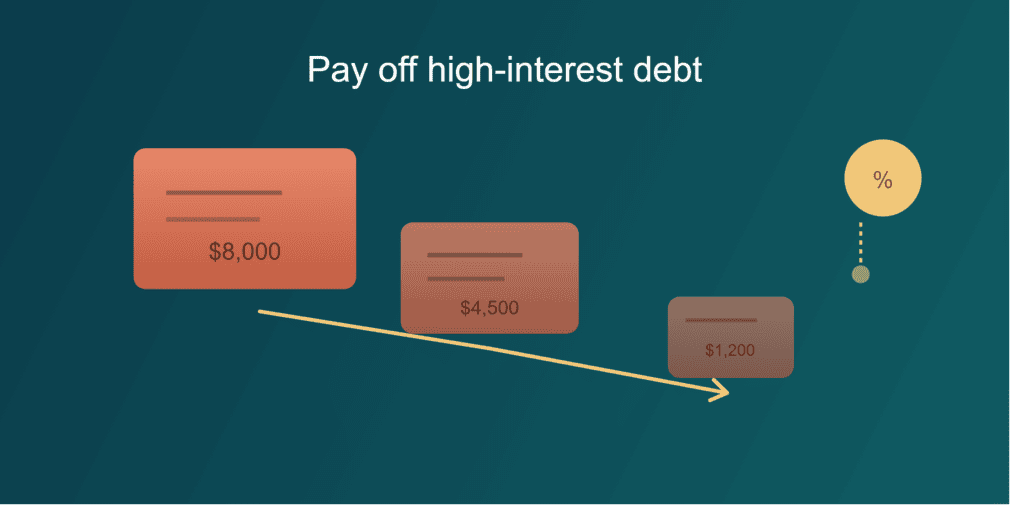
List out your credit cards and loans with their interest rates and balances, then build a payoff plan around the most expensive debt. Two common strategies:
- Debt avalanche — pay off the highest interest rate first. Mathematically optimal; minimizes total interest paid.
- Debt snowball — pay off the smallest balance first. Behaviorally optimal for many people, since early wins build momentum.
Both work as long as you keep making minimum payments on everything else and direct any extra cash toward your target debt. Every dollar you’re not paying in interest is a dollar available for saving and investing instead.
4. Build an Emergency Fund
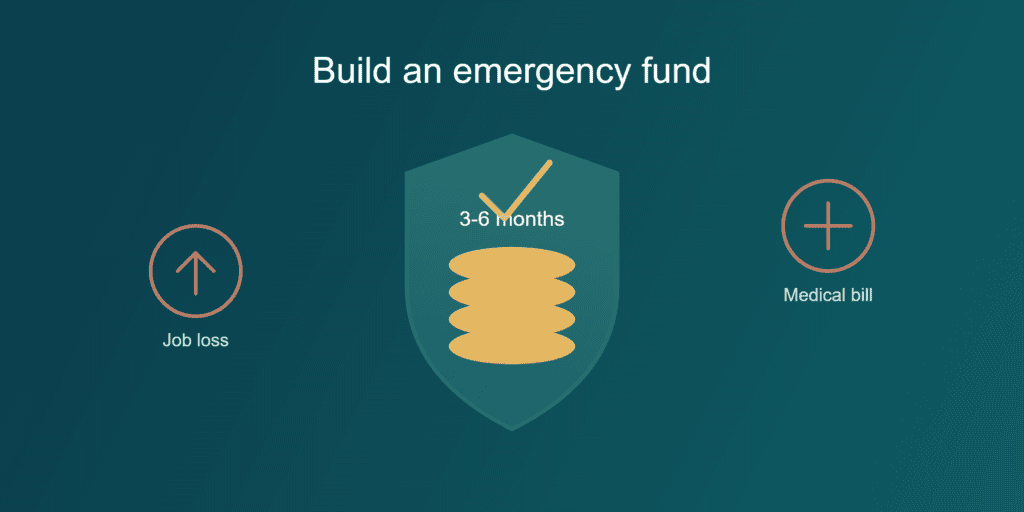
An emergency fund keeps a job loss, medical bill, or car repair from turning into new debt. Base the target on your essential monthly costs and income stability three to six months of expenses is a common range and keep it in an accessible, separate savings account (a high-yield savings account is worth considering here, since the cash still earns something while staying liquid).
This isn’t idle money. It’s what protects your investments from having to be sold at a bad time just to cover a surprise expense.
5. Invest for Long-Term Growth
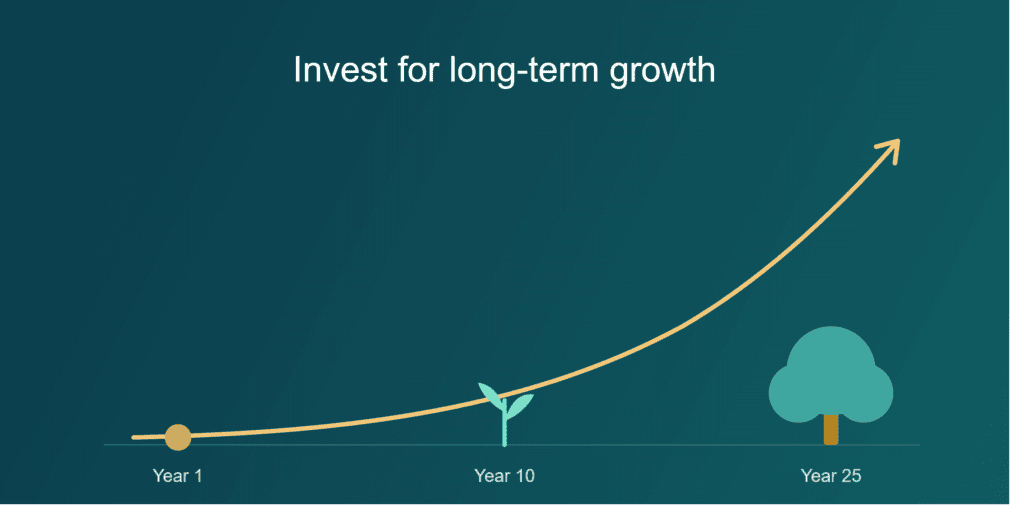
Once you have a savings habit and an emergency fund, investing is what turns income into long-term wealth. A diversified portfolio a mix of stocks, bonds, and index or mutual funds spreads risk across asset classes so no single investment can sink your progress. Your specific mix should reflect your time horizon and how much volatility you can tolerate, not what’s trending.
Two accounts are worth knowing: a taxable brokerage account for flexible investing, and tax-advantaged retirement accounts (like a 401(k) or IRA) for long-term goals. The latter often comes with an employer match or tax break that’s effectively free money.
Why compounding matters: when investment returns are reinvested, you start earning returns on your returns not just your original contribution. The effect is small in year one and dramatic by year twenty. This is why starting early usually matters more than finding the “best” investment; time is the input compounding needs most.
6. Grow the Value of Your Other Assets

Beyond a portfolio, other assets can appreciate or produce income too: real estate builds equity through mortgage paydown and price appreciation, a business can grow in value as it scales, and education or certifications can raise your long-term earning power. Prioritize assets that either generate cash flow or have a realistic path to appreciate not things that mainly cost money to maintain.
7. Build Multiple Income Streams
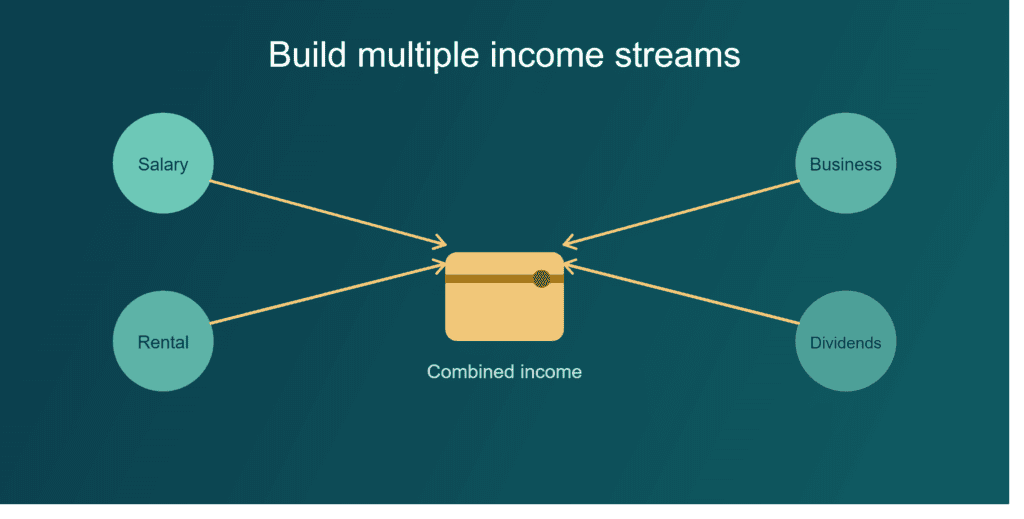
A single paycheck is a single point of failure. Rental income, dividends, royalties, or a side business create income that isn’t entirely dependent on one job. Passive and semi-passive income sources are especially valuable because they keep generating cash even when your time is limited elsewhere. Start with whichever fits your skills, available capital, and risk tolerance you don’t need all of them at once.
8. Avoid Lifestyle Inflation

Lifestyle inflation is when spending rises in step with income, so a raise never actually improves your financial position. The fix isn’t deprivation it’s intention. When your income goes up, decide in advance what portion goes to savings and investing before the rest is available to spend. Even directing half of each raise toward your financial goals, while enjoying the other half, keeps net worth moving in the right direction.
9. Improve Your Financial Literacy

Understanding how budgeting, investing, debt, and risk actually work turns financial decisions from guesswork into strategy. This doesn’t require a finance degree reading a couple of solid personal finance books, following credible sources, or working through a budgeting app’s education content is usually enough to make meaningfully better decisions.
10. Track Your Net Worth Regularly

You can’t manage what you don’t measure. Recalculating your net worth every quarter (or even just once or twice a year) turns an abstract goal into a visible trend line. It also catches problems early a liability creeping up or an asset underperforming shows up in the number long before it becomes a crisis. A simple spreadsheet or a free net worth tracking app is enough to start.
People Also Ask
What is the fastest way to increase net worth?
Widen the gap between income and expenses, then direct the surplus toward paying off high-interest debt and investing in appreciating assets. The bigger the gap, the faster the number moves.
What is a good net worth by age?
It depends heavily on income and life stage, so there’s no single universal target. A common approach is comparing your net worth to your annual salary at different ages, then adjusting for your own cost of living and goals rather than chasing a generic benchmark.
How many Americans have a net worth of $1 million or more?
Estimates vary by source and methodology, but recent data based on the Federal Reserve’s Survey of Consumer Finances puts the figure at roughly 22 to 24 million U.S. households around 17 to 18% when home equity is included. Excluding primary residence equity, the share is meaningfully lower, since a large portion of many households’ wealth is tied up in their home.
How can I grow my money?
Build the foundation first pay off high-interest debt and set up an emergency fund in a high-yield savings account then shift focus to long-term investing through diversified, low-cost index funds or ETFs.
Conclusion
Increasing your net worth isn’t about one big move it’s the compounding effect of several smaller ones: growing income, saving consistently, clearing high-interest debt, keeping an emergency fund, investing for the long term, and resisting lifestyle inflation as your income rises. None of these require extreme sacrifice. They just require doing them consistently, and checking the number often enough to know it’s actually working.
1 thought on “How Can I Increase My Net Worth? 10 Smart Ways”