
There’s a very specific kind of silence that follows heartbreak the kind where you have a thousand feelings and no words to match them. That’s exactly the gap shayari was built to fill.
For generations, Urdu shayari has been the language people reach for when plain sentences feel too small for what they’re feeling. A two-line sher can hold a whole relationship the falling in love, the waiting, the goodbye in a way a paragraph never could. That’s why “sad love shayari in english” is one of the most searched phrases among people going through heartbreak, missing someone far away, or simply trying to put a caption on a feeling they can’t fully explain.
This is a complete collection: sad shayari, one-line and two-line shayari, couple shayari, long-distance love shayari, first-love shayari, and heart-touching life shayari all written in Urdu script and Roman Urdu (Hindi shayari written in English letters), so you can read, copy, and share them wherever you are in the world.
What Is Shayari? A Quick Definition
Shayari is a form of Urdu (and Hindi-Urdu) poetry built around emotion, rhythm, and rhyme. A single couplet is called a sher, a poem made of many rhyming couplets is a ghazal, and a freer, non-rhyming poem is a nazm. Each sher usually stands on its own meaning you don’t need the whole poem to feel its full emotional weight. That’s exactly why shayari works so well as a WhatsApp status, an Instagram caption, or a message to someone you’re missing.
Two words you’ll see often in this guide:
- Ashaar – the plural of sher, meaning “verses” or “couplets.”
- Radif and Qafia – the repeated word and the rhyming sound at the end of each line, which give shayari its musical, echoing quality.
Sad Love Shayari in English (Roman Urdu + Urdu Script)
This is the heart of heartbreak shayari verses about love that ended, love that wasn’t returned, and love that still lingers even after everything is over.
1.
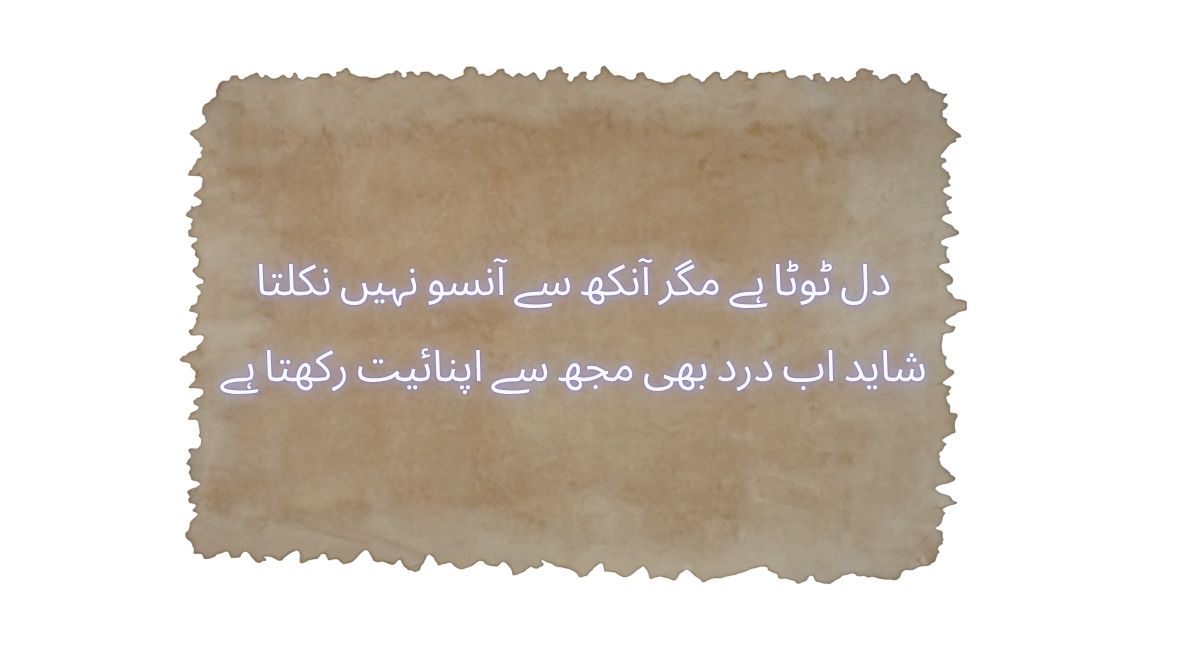
دل ٹوٹا ہے مگر آنکھ سے آنسو نہیں نکلتا شاید اب درد بھی مجھ سے اپنائیت رکھتا ہے
Dil toota hai magar aankh se aansoo nahi nikalta, Shayad ab dard bhi mujh se apnayat rakhta hai.
(My heart is broken, yet no tear falls maybe even pain has grown too close to me now.)
2.
تمہارے بعد محبت پہ یقین تو رہا بس دل نے کسی اور کو موقع نہیں دیا
Tumhare baad mohabbat pe yaqeen to raha, Bas dil ne kisi aur ko mauka nahi diya.
(I still believed in love after you — my heart just never gave anyone else a chance.)
3.
وہ چلا گیا اور رات آنکھوں میں کاٹ دی صبح ہوئی تو خود کو مسکراتا ہوا پایا
Woh chala gaya aur raat aankhon mein kaat di, Subah hui to khud ko muskurata hua paya.
(He left, and I spent the whole night awake — yet by morning, I found myself smiling anyway.)
4.
محبت میں ہارنے کا دکھ نہیں ہوتا دکھ یہ ہے کہ جیت کر بھی تم میرے نہیں ہوئے
Mohabbat mein haarne ka dukh nahi hota, Dukh yeh hai ke jeet kar bhi tum mere nahi huye.
(Losing in love doesn’t hurt — what hurts is that even after winning, you never became mine.)
5.
اب کوئی زخم نیا نہیں دیتا پرانے زخم ہی کافی ہیں رلانے کو
Ab koi zakhm naya nahi deta, Purane zakhm hi kaafi hain rulane ko.
(No new wound is needed anymore the old ones are enough to bring the tears back.)
One Line / 1 Line Love Shayari in English
Sometimes a single line says more than an entire ghazal. These are perfect for a quick status update or a caption when you don’t want to say too much.
| Roman Urdu | English Meaning |
|---|---|
| Tera na hona bhi ek ehsaas hai ab. | Even your absence has become a feeling I carry. |
| Mohabbat kam nahi hui, bas kehna chhod diya. | The love didn’t fade I just stopped saying it. |
| Yaad tu nahi aata, dard tera aata hai. | It’s not you I remember it’s your pain that returns. |
| Khamoshi bhi ek jawab hoti hai kabhi kabhi. | Sometimes silence is an answer too. |
| Dil abhi bhi tera hai, sirf zubaan khamosh hai. | The heart is still yours; only the words have gone quiet. |
In Urdu script:
تیرا نہ ہونا بھی ایک احساس ہے اب محبت کم نہیں ہوئی، بس کہنا چھوڑ دیا یاد تو نہیں آتا، درد تیرا آتا ہے
2 Line Shayari for GF (Romantic and Sad, Both)
Whether you want to express love or the ache of missing her, here are two-line verses made for exactly that moment.
Romantic:
تیری مسکراہٹ میں وہ سکون ہے جو دنیا کی کسی نعمت میں نہیں
Teri muskurahat mein woh sukoon hai, Jo duniya ki kisi naimat mein nahi.
(There’s a peace in your smile that no blessing in this world can give.)
Sad / Missing Her:
تجھے بھلانے کی کوشش میں تیری یاد اور گہری ہوگئی
Tujhe bhulane ki koshish mein, Teri yaad aur gehri ho gayi.
(In trying to forget you, my memory of you only grew deeper.)
For Distance:
فاصلے بڑھ گئے مگر محبت وہیں کھڑی ہے جہاں تجھے پہلی بار دیکھا تھا
Faasle badh gaye magar mohabbat wahin khadi hai, Jahan tujhe pehli baar dekha tha.
(The distance grew, but my love still stands exactly where I first saw you.)
Emotional Heart Touching Shayari in English
These verses go beyond romantic love they speak to the deeper, quieter emotions of longing, self-reflection, and healing.
1.
خود کو سنبھالنا سیکھ لیا ہے میں نے اب کیونکہ ہر بار تم آ کر بکھیر نہیں سکتے
Khud ko sambhalna seekh liya hai maine ab, Kyunki har baar tum aa kar bikher nahi sakte.
(I’ve learned to hold myself together now because you can’t keep coming back to break me apart.)
2.
کچھ رشتے وقت نہیں، سمجھ مانگتے ہیں اور ہم دونوں کبھی ایک صفحے پر نہ آ سکے
Kuch rishtay waqt nahi, samajh maangte hain, Aur hum dono kabhi ek safhe par na aa sake.
(Some relationships don’t need time, they need understanding and we could never get on the same page.)
3.
درد چھپانا آ گیا ہے اب مسکرا کر شاید یہی سب سے بڑی مہارت ہے زندگی کی
Dard chhupana aa gaya hai ab muskura kar, Shayad yehi sabse badi mahaarat hai zindagi ki.
(I’ve learned to hide pain behind a smile maybe that’s the greatest skill life teaches.)
Heart Touching Shayari in English (General Collection)
1.
ہر کوئی پاس ہو کر بھی دور لگتا ہے جب دل میں کسی اور کا بسیرا ہو
Har koi paas ho kar bhi door lagta hai, Jab dil mein kisi aur ka basera ho.
(Everyone feels distant, even when close, when someone else already lives in your heart.)
2.
محبت کرنا آسان تھا نبھانا مشکل ہو گیا
Mohabbat karna aasan tha, Nibhana mushkil ho gaya.
(Falling in love was easy staying true to it became the hard part.)
3.
جو دل سے نکل کر لبوں تک نہیں آیا وہ درد سب سے زیادہ تکلیف دیتا ہے
Jo dil se nikal kar labon tak nahi aaya, Woh dard sabse zyada takleef deta hai.
(The pain that never leaves the heart to reach the lips hurts the most.)
Shayari for Long Distance Love
Distance doesn’t reduce love it changes its shape. These verses speak directly to people loving across cities, countries, and time zones.
1.
فاصلے تو بس نقشے پر ہیں دل تو ابھی بھی ساتھ ساتھ دھڑکتا ہے
Faasle to bas naqshe par hain, Dil to abhi bhi saath saath dhadakta hai.
(The distance only exists on a map our hearts still beat together.)
2.
رات کو جب تارے گنتا ہوں تیرے شہر کا آسمان یاد آ جاتا ہے
Raat ko jab taare ginta hoon, Tere shehar ka aasman yaad aa jata hai.
(When I count stars at night, I remember the sky above your city.)
3.
فون کی گھنٹی پر دل اب بھی وہی دھڑکتا ہے جیسے تم میرے سامنے کھڑے ہو
Phone ki ghanti par dil ab bhi wohi dhadakta hai, Jaise tum mere samne khade ho.
(My heart still races at the sound of your call, as if you were standing right in front of me.)
First Love Shayari in English
First love has a particular innocence to it the kind that stays with you even years later.
1.
پہلی محبت بھلائی نہیں جاتی بس وقت کے ساتھ خاموش ہو جاتی ہے
Pehli mohabbat bhulai nahi jaati, Bas waqt ke saath khamosh ho jaati hai.
(First love is never forgotten it just grows quiet with time.)
2.
وہ پہلی نظر، وہ پہلا خط آج بھی دل کے کسی کونے میں محفوظ ہے
Woh pehli nazar, woh pehla khat, Aaj bhi dil ke kisi kone mein mehfooz hai.
(That first glance, that first letter still kept safe in a corner of my heart today.)
Life Heart Touching Shayari in English
Beyond romantic love, shayari also captures the bigger emotions of life time passing, people changing, and lessons learned the hard way.
1.
زندگی نے سکھایا ہے ہنس کر جینا چاہے اندر سے کتنا بھی ٹوٹے ہوں ہم
Zindagi ne sikhaya hai has kar jeena, Chahe andar se kitna bhi toote hon hum.
(Life has taught me to smile through it, no matter how broken I am inside.)
2.
وقت بدل جاتا ہے، لوگ بدل جاتے ہیں بس یادیں ہیں جو ویسی کی ویسی رہتی ہیں
Waqt badal jata hai, log badal jate hain, Bas yaadein hain jo waisi ki waisi rehti hain.
(Time changes, people change only memories stay exactly the same.)
Love Couple Shayari in English
For couples who want to express what they feel for each other, in words that feel bigger than “I love you.”
تیرے ساتھ خاموشی بھی کسی گفتگو سے زیادہ خوبصورت لگتی ہے
Tere saath khamoshi bhi, Kisi guftagu se zyada khoobsurat lagti hai.
(Even silence with you feels more beautiful than any conversation.)
تم مل گئے تو زندگی مکمل لگنے لگی جیسے ہر ادھوری کہانی کو اختتام مل گیا ہو
Tum mil gaye to zindagi mukammal lagne lagi, Jaise har adhoori kahani ko ikhtitaam mil gaya ho.
(Since I found you, life feels complete like every unfinished story finally found its ending.)
Sad Shayari in Hindi But Written in English (Hinglish Style)
This is the same emotional Hindi-Urdu shayari, spelled the way most people type it casually online.
- Tumse bichadke bhi tumhe bhula na saka, shayad yehi pyaar ki sabse badi saza hai. (Even after parting from you, I couldn’t forget you maybe that’s love’s biggest punishment.)
- Dil ne kaha tha tu wapas aayega, waqt ne sirf itna kaha, sabr kar. (My heart said you’d return; time only said, be patient.)
- Mohabbat mein sabse mushkil kaam hai, uss shaks ko bhulana jo kabhi apna tha. (The hardest thing in love is forgetting someone who once belonged to you.)
A Word on the Tradition Behind These Words
Shayari doesn’t come from nowhere it comes from centuries of poets who turned personal pain into something universal. When you read a sad sher today, you’re part of a tradition that includes some of the greatest names in South Asian literature.
- Mirza Ghalib — often considered the greatest Urdu poet, known for turning philosophical grief and unfulfilled love into deeply layered couplets, full of irony and self-aware sorrow.
- Mir Taqi Mir — one of the earliest masters of the ghazal, famous for a plain, aching simplicity that later poets tried to imitate but rarely matched.
- Faiz Ahmed Faiz — blended personal heartbreak with the pain of a whole nation, making his poetry resonate on both a romantic and a political level.
- Parveen Shakir — brought a distinctly feminine voice to modern Urdu poetry, writing about love, longing, and vulnerability with striking tenderness and honesty.
You don’t need to have read a single ghazal by these poets to feel what this collection is doing but knowing their names helps you understand why shayari feels so different from an ordinary quote. It’s built on rhythm (wazan), rhyme (qafia), and a repeated closing word or phrase (radif) that gives each couplet its musical, almost hypnotic quality.
Why These Verses Feel So Personal
A well-written sher often works through contrast placing two opposite feelings side by side, like smiling on the outside while breaking on the inside (see verse 3 in the Emotional section above). This contrast is what makes a two-line verse feel like it understands your exact situation, even though it was written for no one in particular. That’s the real power of shayari: it’s specific enough to feel personal, and universal enough to belong to everyone who reads it.
How to Use This Poetry
As a WhatsApp or Instagram status: Pick a one-line or two-line sher that matches your mood exactly — shorter verses work best as captions because they read in a single glance.
As a message to someone you love or miss: A long-distance shayari or first-love verse can say what a plain “I miss you” often can’t. Send it as a text, or handwrite it in a letter for something more personal.
For a dedication or anniversary: Couple shayari works beautifully in cards, anniversary posts, or as a caption under a photo with your partner.
For healing after heartbreak: Sad shayari isn’t just for sharing reading it privately can help you feel understood on nights when nothing else does. There’s real comfort in knowing someone else has put your exact feeling into words.
On social media bios or story captions: One-liners are perfect here they don’t overwhelm the space, but they say enough to make people pause.
Frequently Asked Questions
What is the difference between shayari, ghazal, and nazm? Shayari is the general term for Urdu poetry. A ghazal is a poem made of multiple independent couplets that share the same rhyme and refrain. A nazm is a poem that follows one continuous theme from beginning to end, without the couplet-by-couplet independence of a ghazal.
Can I use these shayari as Instagram or WhatsApp captions? Yes. Two-line and one-line shayari were practically made for this they’re short enough to read instantly and emotional enough to make an impact.
Why is shayari usually shared in both Urdu script and Roman Urdu? Not everyone reads Urdu script fluently, especially readers in the diaspora or those more comfortable with Hindi. Roman Urdu makes the same verse accessible to a much wider audience while keeping its original words intact.
Is sad shayari only for people going through a breakup? No. It’s also used to express general heartache, loneliness, missed opportunities, and even nostalgia for a version of life or love that has changed with time.
What makes a shayari couplet “heart touching”? Usually it’s a specific, relatable image (like an empty chair, a phone that doesn’t ring, a memory that resurfaces) combined with a rhyme that makes the line linger in your mind after you’ve read it.
Who are the most famous Urdu poets known for love and heartbreak poetry? Mirza Ghalib, Mir Taqi Mir, Faiz Ahmed Faiz, and Parveen Shakir are among the most celebrated names, each bringing a distinct voice to the themes of love, loss, and longing.
Final Thoughts
Heartbreak has a way of making you feel like no one could possibly understand exactly what you’re going through and then you read two lines of shayari and realize someone, somewhere, already put your feeling into words. That’s the quiet magic of this tradition: it doesn’t just describe love and loss, it makes you feel a little less alone inside them.
If one of these verses found its way into your heart today, share it with someone who needs to hear it or simply save it for the next time your own words aren’t enough.