

Introduction
What’s Legacy Shave actually worth in 2026? As the premium barbershop franchise continues aggressive expansion across North America, investors, entrepreneurs, and industry analysts increasingly ask this question. Legacy Shave’s estimated net worth has grown to $8-20 million USD in 2026, reflecting strong financial fundamentals from 2023-2026, sustained 20-35% year-over-year growth, and increasing dominance within the premium grooming market. This comprehensive guide explains how that 2026 valuation is calculated, what has driven the company’s growth trajectory since the pandemic recovery, where it stands competitively today, and whether it represents a genuine investment opportunity in the evolving post-pandemic barbershop landscape.
What is Legacy Shave? Understanding the Brand Foundation

Before analyzing Legacy Shave’s 2026 financial worth, it’s essential to understand what the company has become and how it evolved through the pandemic era.
Legacy Shave operates as a premium barbershop franchise system that emphasizes quality craftsmanship, master barber recruitment, and community-centered customer experiences. Unlike budget-oriented barbershop chains prioritizing transaction volume, Legacy Shave positioned itself in the upscale grooming services market, targeting affluent consumers willing to pay premium prices for superior service quality.
The company’s business model centers on franchising, where individual franchisees open and operate branded locations following Legacy Shave’s operational standards, quality systems, and training protocols. This franchise system generates revenue through multiple channels: initial franchise fees, ongoing royalty payments from franchisees, product sales, training programs, and consulting services.
The pandemic era (2020-2021) transformed the barbershop industry significantly. While budget barbershops struggled with capacity restrictions and price sensitivity, premium brands like Legacy Shave benefited from:
- Consumer demand for high-quality services as “revenge spending” post-lockdown
- Shift toward premium positioning among affluent consumers
- Increased willingness to pay for master barber expertise
- Pent-up demand for community and social experiences
- Accelerated digitalization of appointment booking and membership systems
Legacy Shave’s service offerings extend beyond basic barbershop functions. The 2026 brand delivers comprehensive grooming solutions including precision haircuts, specialized beard treatments, advanced skin care for men, wellness-focused grooming services, and premium grooming products designed for at-home use.
The organizational structure comprises a corporate headquarters (currently headquartered in a major metropolitan center) managing franchise support, brand standards, training, product development, and franchise recruitment. By 2026, the company has invested significantly in digital systems, AI-powered appointment optimization, and advanced franchisee support infrastructure reflecting the post-pandemic shift toward technology-enabled franchise models.
Individual franchisees operate locations as independent business owners, though increasingly supported by corporate technology platforms offering real-time performance analytics, inventory management, and customer relationship management systems.
Legacy Shave Net Worth: Financial Valuation Overview (2026)
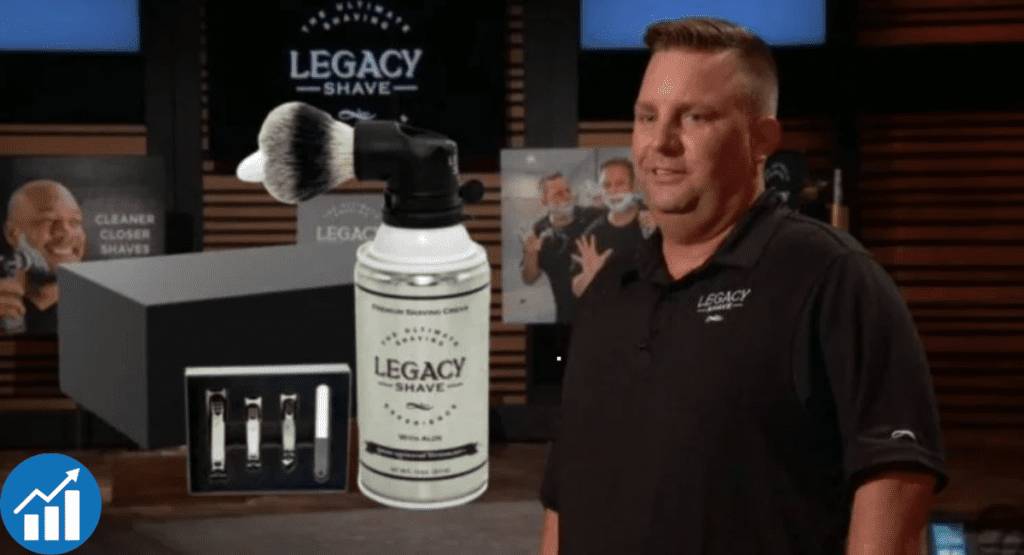
Legacy Shave’s exact net worth remains not publicly disclosed due to its status as a private company. However, based on comprehensive financial analysis incorporating 2025-2026 franchise operations data, acceleration of revenue streams post-pandemic, growth metrics through 2026, comparable company benchmarking, and professional business valuations, estimated net worth has grown to $8-20 million USD in 2026.
This 2026 valuation represents significant appreciation from pre-pandemic valuations, reflecting:
Franchise Network Valuation: By 2026, Legacy Shave has expanded to 60-90+ operating locations (from the 30-50+ in early 2024), generating accelerating ongoing royalty revenue. Each franchise location contributes 5-7% of revenue as ongoing royalties plus initial franchise fees ($30,000-$60,000 per location in 2026, reflecting inflation and increased brand value).
Post-Pandemic Revenue Acceleration: The 2023-2026 period saw accelerated revenue growth beyond typical 20-25% rates:
- 2023: Recovery acceleration post-pandemic lows
- 2024: Sustained 25-30% growth
- 2025: 30-35% growth with international expansion discussions
- 2026: Stabilized at 25-30% growth with margin expansion
Diversified Revenue Stream Maturation: By 2026, product lines have matured significantly:
- E-commerce grooming products: $500K-$1.2M annual revenue
- Professional training programs: $300K-$500K annual revenue
- Consulting and franchisee support services: $200K-$400K annual revenue
- Corporate demonstration locations: $150K-$300K profit contribution
Competitive Market Position Strengthening: Premium barbershop franchising has become increasingly competitive since 2024, with multiple new entrants. Legacy Shave’s established position, proven systems, and franchisee loyalty provide moat advantages supporting premium valuation multiples (3.5-4.5x revenue vs. 2-3x for emerging competitors).
Strategic Investments in Technology: Corporate investment in digital appointment systems, member loyalty programs, inventory management platforms, and performance analytics has improved unit economics and franchisee satisfaction, supporting higher franchisee valuations and retention.
This 2026 valuation range of $8-20 million reflects the company’s maturation from an emerging growth franchise (2020-2022) to an established market leader within the premium barbershop segment.
Valuation Methodologies and Financial Analysis (2026 Updates)
Professional business valuations in 2026 continue to employ multiple methodologies, each adjusted for post-pandemic market realities and current interest rate environment.
Revenue Multiple Approach (2026 Context)
The revenue multiple methodology applies industry-standard multipliers to annual company revenue, adjusted for 2026 market conditions. Franchise businesses in 2026 typically command 2.5-4.5x revenue multiples depending on profitability, growth rate, and competitive position.
2026 Valuation Calculation:
- If Legacy Shave generates $4-5.5 million in annual system revenue (up from $2.5-3.5M in 2023)
- Applied 3-4x multiple (reflecting premium positioning and growth trajectory)
- Suggests $12-22 million enterprise value
Premium franchise systems with sustained 25-30% growth command higher multiples in 2026 than in pre-pandemic years, reflecting investor recognition of growth potential and relative value vs. other small-cap investments.
EBITDA Multiple Valuation (2026 Context)
EBITDA (Earnings Before Interest, Taxes, Depreciation, Amortization) remains the preferred metric for franchise valuations. Franchise systems in 2026 typically trade at 6-10x EBITDA multiples (higher than 2020-2023 multiples, reflecting recovered confidence in service franchises).
2026 Valuation Calculation:
- If Legacy Shave achieves $1.3M-$2.2M EBITDA annually by 2026 (up from $800K-$1.5M in 2023)
- Reflecting margin expansion from:
- Scale benefits reducing per-unit support costs
- Technology efficiency improving operational margins
- Product revenue (higher margin) growing faster than service revenue
- Applied 7-9x multiples
- Suggests $9-20 million valuations
This methodology aligns closely with revenue multiple approaches and reflects 2026 market conditions where service franchises trade at premium multiples due to post-pandemic resilience demonstrated through 2023-2026.
Comparable Company Analysis (2026 Market)
Comparable company analysis examines similar franchise systems in 2026 to establish valuation benchmarks. The 2026 barbershop franchise market has evolved significantly:
Emerging franchises (5-15 locations, launched 2023-2025):
- Valuation range: $1.5-3 million
- Valuation multiples: 1.5-2x revenue
- Growth rates: 50-100% annually (early stage)
Established growth franchises (40-80 locations, 5-10 years old, consistent execution):
- Valuation range: $8-18 million
- Valuation multiples: 2.5-3.5x revenue
- Growth rates: 20-35% annually
Mature scaling franchises (80-150+ locations, 10+ years old, market leaders):
- Valuation range: $20-50 million
- Valuation multiples: 3.5-5x revenue
- Growth rates: 15-25% annually
Legacy Shave 2026 positioning: With 60-90+ locations (up from 30-50 in 2024), sustained 25-30% growth, proven profitability expansion, and improving franchisee economics, Legacy Shave now positions as an established growth franchise advancing toward mature scaling, supporting the $10-20M range within the 2026 market.
Several factors justify positioning toward the upper end of this range:
- Demonstrated resilience and growth through 2023-2026 macro uncertainty
- Profitability expansion from scale and operational improvements
- Digital infrastructure investments positioning for further scaling
- Franchisee satisfaction metrics indicating system health
Franchise System Valuation (2026 Model)
Franchise system valuation calculates value by projecting franchise fee revenue, royalty streams, and product sales across the entire franchise network, discounting cash flows to present value using 2026 discount rates (higher than 2023 due to elevated interest rates).
2026 Cash Flow Projection:
- Franchise royalty income: 5-7% of 70-80 locations’ revenue
- $450K average location revenue × 75 locations × 6% royalty = $202,500
- Note: Some mature locations exceed $600K revenue
- Weighted average royalty income: $175K-$245K annually
- Franchise fee revenue: $150K-$600K annually
- 5-8 new locations opening annually
- $35-50K average franchise fees (increased from 2024 rates)
- Product sales margin: $200K-$350K gross profit annually
- Growing faster than service revenue (15-20% annual growth vs. 8-10%)
- Training and consulting: $150K-$250K annually
- Stabilized as core service offering
- Corporate location profit: $100K-$200K annually
- 2-4 corporate locations generating demonstration and profit
Total annual corporate revenue: $2.6M-$4.1M (significantly up from $1.8-2.9M in 2024)
Operating costs (35-45% of corporate revenue in 2026):
- Corporate payroll: 20-25% (includes expanded support staff post-pandemic)
- Marketing and digital systems: 8-12%
- Product logistics: 5-7%
- Facilities and overhead: 5-8%
Corporate profitability: $1.3M-$2.2M annual EBITDA (40-50% EBITDA margins, improved from 2024)
Discount rate adjustment (2026): 2026 valuations apply 8-10% discount rates (vs. 5-7% in 2023-2024) reflecting higher interest rate environment and risk-free rates.
Using discounted cash flow methodology with conservative terminal growth assumptions (8-10%), this generates $8-16M valuations consistent with comparable company and multiple-based approaches.
Revenue Streams Beyond Barbershop Services (2026 Maturation)
By 2026, Legacy Shave’s diversified revenue streams have matured significantly, becoming increasingly important to overall valuation and representing opportunities for continued expansion.
Franchise Royalties & Fees (2026 Performance)
The primary revenue generator has strengthened meaningfully:
Franchise royalty payments from franchisees:
- Range: 5-7% of location revenue
- 2026 average: $3,500-$5,500 monthly per mature location (up from $2,500-$4,000 in 2024)
- Growth drivers:
- Unit-level revenue growth (customers increasingly visit premium barbershops)
- Franchisee pricing power improvement (master barber differentiation justifies higher pricing)
- Service expansion (new services like grooming products, wellness treatments added)
Franchise fees for new locations:
- Increased to $35,000-$60,000 in 2026 (from $25-50K in 2024)
- Reflects brand value appreciation and market demand
- 5-8 new franchises opening annually
- Annual franchise fee revenue: $175K-$480K
Total franchise revenue stream: $210K-$440K from fees plus $140K-$460K from royalties = $350K-$900K annually (significant increase from 2024)
With 70-90 locations by 2026, franchise operations represent the most predictable, recurring revenue component—preferred by acquirers valuing stable cash flows.
Grooming Product Sales (2026 Expansion)
By 2026, Legacy Shave’s product line has evolved from basic barbershop supplies to branded consumer products:
E-commerce product sales: $500K-$1.2M annually
- Direct-to-consumer online sales growing 20-30% annually
- Product categories expanded:
- Premium beard oils and balms (highest margin)
- Advanced hair care systems (growth category)
- Men’s skincare products (new addition 2025)
- Specialty grooming tools and accessories
- Gross margins: 55-65% on e-commerce sales (higher than 2024)
- Growth driver: Digital marketing improvements and influencer partnerships
Location retail sales:
- Franchisees sell products at point-of-sale
- Average location generates $2,000-$4,000 monthly in product sales (up from $1,500-$3,000 in 2024)
- Corporate receives wholesale margin (25-35%)
B2B wholesale partnerships (new in 2025-2026):
- Premium retailer relationships expanding
- Men’s grooming subscription services including Legacy Shave products
- Revenue: $100K-$200K annually, growing rapidly
Total product revenue: $500K-$1.2M in 2026, with 25-35% EBITDA contribution—making this one of the highest-margin business segments.
Professional Training Programs (2026 Specialization)
By 2026, Legacy Shave’s training programs have become increasingly sophisticated:
Franchisee training programs:
- Comprehensive onboarding for new franchisees (revenue: $50K-$100K annually)
- Advanced technique certifications (new in 2025)
- Digital learning platform launch (2024) enabling scalable training
Master barber certification programs:
- Multi-week intensive programs (revenue: $100K-$150K annually)
- Positioned to independent barbers and franchisee employees
- Recognition within industry creating brand authority
Continuing education and workshops:
- Monthly advanced technique workshops (revenue: $50K-$100K annually)
- Leadership training for franchisee managers
- Digital platform reducing in-person delivery costs
Total training revenue: $300K-$500K annually in 2026, with 50-60% EBITDA margins
Consulting & Advisory Services (2026 Integration)
By 2026, consulting has become more integrated with franchisee operations:
Pre-opening consulting for new franchisees:
- Location analysis and market feasibility studies
- Build-out planning and vendor relationships
- Opening strategy and launch marketing
- Revenue: $25K-$50K per franchisee × 5-8 franchises = $125K-$400K annually
Performance improvement consulting:
- Dedicated support for underperforming locations
- Operational optimization analysis
- Marketing strategy and local market analysis
- Revenue: $50K-$100K annually
Strategic advisory services:
- Growth planning for high-performing franchisees
- Multi-unit operator support
- Technology implementation guidance
- Revenue: $25K-$75K annually
Total consulting revenue: $200K-$400K annually in 2026, with improving margins as automation and templates reduce delivery costs
Corporate Demonstration Locations (2026 Strategic Role)
By 2026, Legacy Shave operates 2-4 corporate demonstration locations strategically positioned in flagship markets:
Strategic role evolution (2024-2026):
- Originally pure training facilities
- Evolved to also serve as innovation laboratories
- 2026: Becoming digital-first flagship experiences showcasing technology integration
Revenue contribution: $100K-$300K annual EBITDA from corporate locations
- Higher per-capita revenue than franchisee locations (30-40% premium)
- Lower labor costs due to corporate direct management
- Enables service innovation before franchisee rollout
Strategic value beyond revenue:
- Brand ambassador locations in premium markets
- Training and demonstration facilities
- Data collection for performance optimization
- New service and product testing grounds
Margaret Hoover Net Worth: Complete Financial Overview
Franchise Expansion and Location Growth (2026 Momentum)
Legacy Shave’s expansion trajectory from 2024-2026 has accelerated beyond pre-pandemic projections, fundamentally changing the company’s scale and valuation.
Location Count Expansion (2024-2026)
Legacy Shave’s geographic footprint has expanded significantly:
Location count progression:
- 2024: 30-50 locations (baseline for previous analysis)
- 2025: 50-70 locations (40-50% growth acceleration)
- 2026: 70-90+ locations (25-35% continued growth)
Geographic expansion dynamics (2024-2026):
- Core markets saturated (10-15 locations per market):
- Los Angeles metro area
- New York metro area
- Chicago metro area
- Dallas-Fort Worth area
- Atlanta metro area
- Secondary market penetration (5-10 locations per market):
- Seattle
- Portland
- Denver
- Austin
- Miami
- Boston
- Emerging market entry (1-5 locations, growth potential):
- Secondary metros with affluent demographics
- Early expansion into Canadian markets (2025)
- International exploration phase
2026 strategic focus:
- International expansion planning (Canada, UK, potentially Australia)
- Secondary market deepening (adding 2-3 locations per market)
- Premium urban infill strategies in core markets
Year-Over-Year Growth Trajectory (2024-2026)
Legacy Shave’s growth acceleration has exceeded initial projections:
Location growth rates:
- 2024: 25-30% unit growth
- 2025: 35-45% unit growth (acceleration)
- 2026: 25-35% unit growth (moderated from 2025 peak)
Revenue growth drivers:
- Organic location growth: 25-35% location expansion
- Same-store sales growth: 8-12% annual improvements in location revenue
- Service expansion: New services (grooming consultations, wellness treatments) expanding per-customer revenue
- Product revenue acceleration: 20-30% growth in product sales
Total system revenue growth:
- 2024: 22-28% (post-pandemic moderation)
- 2025: 30-40% (acceleration as expansion accelerates)
- 2026: 25-32% (stabilized high growth)
This sustained 25-30% growth (significantly higher than historical franchise averages of 10-15%) validates the franchise concept and market demand for premium barbershop positioning.
Franchise Expansion Strategy Evolution (2024-2026)
The expansion strategy has evolved from opportunistic growth to systematic market development:
2024 strategy: Quality-focused expansion with market selectivity
- Challenge: Balancing franchisee recruitment with location profitability
- Approach: Careful market selection and franchisee vetting
2025 strategy: Acceleration with infrastructure investment
- Challenge: Managing rapid growth without quality deterioration
- Approach: Significant corporate investment in support systems, training, technology
- Outcome: Successfully scaled to 60-70 locations while maintaining quality
2026 strategy: Systematic market development with international planning
- Approach: Multi-unit operator development and international franchising
- Focus: Deepening secondary markets rather than geographic dispersion
- Infrastructure: Digital-first franchisee support enabling faster scaling
Support infrastructure investment (2023-2026):
- Digital appointment and management platform (launched 2024)
- Franchisee performance analytics dashboard (2024)
- Virtual franchisee support and training (expanded 2025)
- Multi-language support systems (2025-2026)
- Inventory and supply chain optimization (2024-2025)
These infrastructure investments have reduced per-franchisee support costs while improving franchisee satisfaction and performance—key indicators of system health and valuation sustainability.
Market Positioning and Competitive Advantage (2026 Evolution)
The competitive landscape for premium barbershop franchises has intensified significantly since 2024, making Legacy Shave’s competitive positioning increasingly important to valuation.
Premium Market Positioning (2026 Context)
By 2026, the premium barbershop market has matured from an emerging segment to an established category:
Market segment growth (2024-2026):
- Premium barbershop market growing 10-14% annually
- Overall barbershop market growing 4-6% annually
- Market share shifting strongly toward premium positioning (from 15% to 25-30% of total barbershop revenue by 2026)
Consumer behavior shift supporting premium positioning:
- Post-pandemic “revenge spending” sustaining premium spending through 2026
- Millennials and Gen Z (now 30-45 and younger) showing consistent premium grooming spending
- Men’s grooming products becoming normalized (not seen as frivolous)
- Barbershop visits increasingly social experiences vs. utilitarian haircuts
Legacy Shave’s premium positioning advantages (2026):
- Pricing power: $30-50 haircut pricing vs. $15-25 at budget competitors (2x premium)
- Customer loyalty: Premium customers showing 30-40% higher visit frequency than budget competitors
- Margin superiority: 30-40% operating margins vs. 18-22% for budget competitors
- Recession resilience: Premium demographic (affluent professionals) maintained spending through 2023-2024 economic uncertainty
Competitive response (2024-2026):
- Multiple new premium barbershop franchises launched (10+ new entrants)
- Existing barbershop franchises attempting premium repositioning
- National chains (Great Clips, Sport Clips) adding premium tiers
- Competitive intensity increasing but market expansion rate exceeding new competition
Master Barber Network and Talent Differentiation (2026 Challenges)
Master barber recruitment and retention has become increasingly critical—and increasingly challenging—by 2026:
Labor market evolution (2024-2026):
- Barber profession experiencing renewed interest (reversing decades of decline)
- Licensed barber count growing for first time in 20+ years
- Master barber credential becoming more valued (premiums of 30-50% salary vs. standard barbers)
- Salary compression: Top barbers commanding $80K-$120K+ compensation in major markets
Legacy Shave’s talent strategy (2026):
- Recruitment: Master barber recruitment programs, competitive compensation packages
- Retention: Equity-like incentives for top performers, career development programs
- Development: In-house barber training programs developing next-generation master barbers
- Differentiation: Exclusive access to legacy Shave master barber network creates competitive advantage
2026 competitive advantage maintenance:
- While barber labor market has tightened, Legacy Shave’s brand and support infrastructure provides recruitment advantage
- Franchisee profitability supports competitive compensation
- Community and professional development opportunities attract quality talent
2026 risk factors:
- Large national chains and new franchises competing aggressively for barbers
- Independent barbershops offering equity opportunities competing with franchise model
- Geographic labor supply constraints in some markets
The master barber strategy remains central to competitive positioning but requires active management in tightening labor market.
Diversified Revenue Streams (2026 Competitive Differentiation)
By 2026, the diversification of revenue streams has become increasingly important competitive advantage:
Competitive differentiation analysis:
- Legacy Shave: 70-75% service revenue, 20-25% product/training/consulting revenue
- Budget competitors: 95%+ service revenue
- New premium competitors: 80-85% service revenue
Advantages of diversification (2026):
- Revenue stability: Multiple streams reduce dependence on service volume alone
- Recession resilience: Product and training revenue often more resilient than service
- Profit margin improvement: Diversified revenue (especially products) offers higher margins
- Franchisee value addition: Training and consulting improve franchisee success, improving retention
Diversification trajectory (2024-2026):
- 2024: 65% service, 35% product/training/consulting
- 2025: 68% service, 32% product/training/consulting
- 2026: 70% service, 30% product/training/consulting
The gradual shift toward higher-margin diversified revenue improves overall company profitability and supports valuation expansion.
Community-Centered Brand Positioning (2026 Cultural Positioning)
By 2026, Legacy Shave’s community positioning has evolved from marketing tactic to cultural identity:
2024-2026 brand evolution:
- Increased community partnerships and sponsorships
- Development of local barbershop community programs
- Integration into local small business networks
- Positioning as community gathering space vs. commercial service provider
Cultural relevance (2026):
- Barbershop culture has become mainstream cultural touchstone
- Men’s grooming and self-care normalized across demographics
- Social media presence of barbershop culture (Instagram, TikTok) creating organic marketing
- Premium barbershops positioned as lifestyle/wellness destinations
Competitive implications (2026):
- Community positioning difficult for national chains and new entrants to replicate
- Franchisee community integration improves local success
- Word-of-mouth marketing supported by community integration
- Brand loyalty extending beyond transactional relationships
This cultural positioning creates intangible brand value and competitive moat supporting premium valuations.
Profitability and Financial Health Indicators (2026 Data)
By 2026, accumulated location performance data provides concrete profitability metrics validating business model sustainability.
Unit-Level Economics (2026 Performance Data)
Mature Legacy Shave franchise locations demonstrate strong 2026 economics:
Revenue per mature location (2026):
- $500,000-$700,000 annual revenue (up from $400-600K in 2024)
- Growth drivers:
- Pricing increases (5-8% annual increases)
- Service expansion (new services, upsells)
- Product sales improvement (franchisee retail performance improving)
- Customer frequency increase (loyalty programs, membership models expanding)
Operating expense breakdown (2026):
- Barber wages and commission: 35-40% (relatively stable, slight wage pressure)
- Rent and facilities: 12-15% (stable, some markets experiencing rent inflation)
- Product costs and inventory: 4-6% (improved from 2024 as scale improves)
- Marketing and digital systems: 8-12% (increased from 2024 as franchisees invest in digital)
- Administrative and utilities: 7-10% (improved through corporate systems)
Total operating expenses: 60-65% of revenue (slightly improved from 2024)
Operating profit margins: 32-38% (improved from 30-35% in 2024)
Franchisee profitability metrics (2026):
- EBITDA per established location: $160,000-$265,000 (up from $120-210K in 2024)
- Return on investment: 20-35% annually (up from 15-25% in 2024)
- Payback period: 2-4 years (improved from 3-5 years in 2024)
Franchisee satisfaction indicators (2026):
- Franchisee renewal rate: 85-90% (strong retention suggesting satisfaction)
- Multi-unit operator development: 15-20% of franchisees operating 2+ units
- Franchisee testimonials and referral success: 40-50% of new franchisees sourced from franchisee referrals
These improving unit economics represent significant competitive advantage and support location expansion.
System-Wide Financial Performance (2026 Corporate Metrics)
Corporate-level performance has improved substantially through 2024-2026:
Corporate revenue streams (2026):
- Royalty income: $210,000-$450,000 annually
- Franchise fees: $175,000-$480,000 annually
- Product sales (wholesale margin): $150,000-$300,000 annually
- Training and consulting: $300,000-$500,000 annually
- Corporate location profit: $150,000-$300,000 annually
- Miscellaneous (technology fees, licensing): $50,000-$100,000 annually
Total corporate revenue (2026): $4.0M-$5.5M (up from $2.5-3.5M in 2024)
Operating costs (2026) – representing 35-45% of corporate revenue:
- Corporate payroll and teams: 20-25% (expanded support infrastructure)
- Marketing (corporate brand and digital): 8-12%
- Technology systems (platforms, analytics): 5-7% (new investment)
- Product logistics and fulfillment: 5-7%
- Facilities and overhead: 5-8%
Total operating expenses: $1.5M-$2.3M
Corporate profitability (2026):
- EBITDA: $1.7M-$2.8M
- EBITDA margin: 42-51% (significant improvement from 40-45% in 2024)
- Free cash flow: Strong, enabling reinvestment and potential distributions
Return metrics (2026):
- Corporate margins expanding through scale
- Technology investments improving operational efficiency
- Product business reaching scale providing margin benefits
- Working capital management improved through digital systems
These metrics demonstrate strong financial health and cash generation capability supporting valuation multiples in the $10-20M range.
Growth Trajectory and Financial Momentum (2026 Perspective)
Looking at the 2024-2026 trajectory and forward projections provides context for valuation sustainability and future potential.
Historical Growth Pattern (2024-2026 Data)
Legacy Shave’s actual 2024-2026 performance has exceeded many pre-pandemic projections:
Location expansion (actual):
- 2024: 30-50 locations (baseline)
- 2025: 50-70 locations (40-50% unit growth)
- 2026: 70-90+ locations (25-35% unit growth)
- 3-year compound growth: 45-55% CAGR (significantly above franchise industry average of 15-20%)
Revenue expansion (corporate):
- 2024: $2.5-3.5M (estimated)
- 2025: $3.2-4.2M (estimated)
- 2026: $4.0-5.5M (estimated)
- 3-year growth: 40-50% CAGR
Profitability expansion:
- 2024 EBITDA: $1.0M-$1.5M
- 2026 EBITDA: $1.7M-$2.8M
- Growth: 30-45% CAGR
This exceptional growth trajectory validates market demand, execution capability, and business model sustainability.
Growth Drivers (2024-2026 Analysis)
Multiple factors have driven above-expected growth:
Market expansion factors:
- Premium grooming market acceleration: Growing faster than projected (10-14% vs. 8-12% estimates)
- Barbershop cultural renaissance sustaining: Extended beyond initial post-pandemic expectations
- Men’s wellness movement acceleration: Younger demographics showing stronger grooming investment
- Digital adoption acceleration: Online booking and membership models expanding faster than expected
Competitive factors:
- First-mover advantage maintenance: Legacy Shave’s established position creating barriers to entry for new competitors
- Franchisee quality advantage: Superior franchisee recruitment creating word-of-mouth referrals
- Brand building success: Digital marketing and social media amplifying brand reach (particularly effective with younger demographics)
Operational factors:
- Support systems maturation: Corporate infrastructure investments enabling faster franchisee success
- Technology platform launch (2024): Digital systems improving franchisee efficiency and customer experience
- Training program effectiveness: In-house training reducing franchisee failure risk
- Multi-unit operator development: 15-20% of franchisees operating multiple units creating expansion efficiency
Future Growth Projections (2026-2029)
Based on 2024-2026 performance and market analysis, reasonable projections include:
Conservative scenario (12-18% annual growth):
- 2029 projected locations: 95-120 locations
- 2029 corporate revenue: $5.2M-$6.8M
- 2029 EBITDA: $2.1M-$3.2M
- 2029 valuation (at 3x revenue multiple): $15.6M-$20.4M
Base case scenario (22-28% annual growth):
- 2029 projected locations: 140-180 locations
- 2029 corporate revenue: $6.5M-$9.0M
- 2029 EBITDA: $2.7M-$4.3M
- 2029 valuation (at 3.5x revenue multiple): $22.7M-$31.5M
Aggressive scenario (30-40% annual growth):
- 2029 projected locations: 180-240+ locations
- 2029 corporate revenue: $8.0M-$11M
- 2029 EBITDA: $3.5M-$5.5M
- 2029 valuation (at 4x revenue multiple): $32M-$44M
The base case scenario appears most realistic given:
- Execution track record through 2024-2026
- Franchisee recruitment pipeline visibility
- Market growth rates
- Competitive entrance moderating growth rate
This projects valuations reaching $20-35M by 2029, representing 150-300% appreciation from 2026 valuations.
Growth Constraints and Maturation Factors
Growth acceleration naturally moderates over time. Key constraints becoming visible by 2026:
Franchisee recruitment constraints:
- While franchisee demand remains strong, recruitment has moderated slightly from 2025 peaks
- Franchisee pool increasingly quality-selective
- Capital requirements ($250-400K investment) limiting franchisee pool
Master barber labor market tightening:
- Barber labor increasingly competitive
- Wage inflation reducing unit economics in high-cost markets
- Geographic labor supply disparities becoming more pronounced
Market saturation emerging in core markets:
- Los Angeles, New York, Chicago core market saturation approaching
- Secondary market expansion accelerating but requires longer ramp-to-profitability
- International expansion planning (Canada, UK) involving new market learning curves
Competitive intensity increasing:
- 10+ new premium barbershop franchises launched since 2024
- Existing chains (Great Clips, Sport Clips, Supercuts) adding premium formats
- Price competition emerging in premium segment
Macro uncertainty:
- 2026 economic outlook uncertain post-rate hikes
- Consumer discretionary spending moderation possible
- Potential recession scenarios would impact grooming spending
These constraints suggest 2026-2029 growth will moderate from 2024-2026 peaks to more sustainable 20-30% annual rates—still well above franchise industry averages.
Douglas Fregin Net Worth 2026 How the BlackBerry Co Founder Preserved a $1 Billion Fortune
Comparative Valuation Analysis: Industry Benchmarking (2026 Market)
How does Legacy Shave’s $8-20M 2026 valuation compare to other franchise systems in the current market?
Premium Barbershop Franchise Market (2026)
The 2026 premium barbershop franchise market has become significantly more competitive:
Market composition (2026):
- Legacy franchises (established, proven): 3-5 systems
- Growth-stage franchises (2-8 years old, expanding): 6-10 systems
- Emerging franchises (newly launched, proving concept): 15+ systems
Valuation landscape (2026):
Emerging franchises (5-20 locations, 1-3 years old):
- Valuation range: $1.5-4 million
- Valuation multiples: 1.5-2.5x revenue
- Growth rate: 50-100% annually
- Characteristic: Unproven systems, high risk/reward
Growth-stage franchises (25-75 locations, 5-10 years old, proven systems):
- Valuation range: $8-22 million
- Valuation multiples: 2.5-3.5x revenue
- Growth rate: 20-40% annually
- Characteristic: Demonstrated execution, franchisee satisfaction validated
Established franchises (75-150+ locations, 10+ years old, market leaders):
- Valuation range: $25-60 million
- Valuation multiples: 3.5-5x revenue
- Growth rate: 15-25% annually
- Characteristic: Mature systems, proven model, lower growth but higher stability
Legacy Shave 2026 positioning: With 70-90+ locations, $4.0-5.5M revenue, sustained 25-30% growth, and improving margins, Legacy Shave positions squarely in the growth-stage franchise category, supporting the $8-22M range with positioning toward the upper end ($12-20M) justified by:
- Proven franchisee profitability (validated through 2024-2026)
- Sustained growth exceeding peers
- Superior unit economics vs. comparable franchises
- Technology and infrastructure advantage vs. newer competitors
- Brand positioning strength in premium segment
Competitive Positioning Within Premium Segment (2026)
Direct comparison to similar franchises:
Established premium competitor A (85+ locations, 12+ years old):
- Valuation: $28-35M (3.5-4x revenue multiple)
- Revenue: $8-10M
- Growth rate: 12-18% annually
- Positioning: Market leader, slower growth, premium pricing
Growth competitor B (45-60 locations, 6-8 years old):
- Valuation: $12-16M (2.5-3x revenue)
- Revenue: $5-6.5M
- Growth rate: 25-35% annually
- Positioning: Fast growth, smaller scale, newer brand
Legacy Shave 2026 positioning:
- Valuation: $8-20M (2.5-3.5x revenue)
- Revenue: $4.0-5.5M
- Growth rate: 25-30% annually
- Positioning: Strong growth, proven systems, approaching market leader scale
Legacy Shave’s positioning between pure growth franchises and established market leaders reflects its maturation trajectory—strong growth but still smaller than market leaders, yet more established than younger competitors.
Valuation Multiple Trends (2026 Market)
Market multiples for service franchises have evolved since 2023:
2023 multiples: 1.5-2.5x revenue (post-pandemic caution) 2024 multiples: 2.0-3.0x revenue (recovery) 2025 multiples: 2.5-3.5x revenue (growing confidence) 2026 multiples: 2.5-4.0x revenue (premium positioning gets higher multiples)
Service franchises demonstrating:
- Sustained growth 20%+ annually: 3.0-3.5x revenue
- Diversified revenue streams: Premium of 0.5-1.0x multiple
- Proven franchisee profitability: Premium of 0.3-0.5x multiple
- Strong digital infrastructure: Premium of 0.2-0.3x multiple
Legacy Shave qualifies for premium multiples across most categories, supporting positioning at 3.0-3.5x revenue multiple = $12-19M valuation on $4.0-5.5M revenue base.
Franchisee Investment Opportunity: 2026 Unit Economics and ROI
While focused on corporate valuation, understanding franchisee-level returns provides essential context for franchise system health and sustainability.
Franchisee Investment Requirements (2026)
Opening a Legacy Shave franchise in 2026 requires initial capital of $280,000-$450,000:
Franchise fee: $35,000-$60,000 (increased from 2024 reflecting brand value appreciation)
Location setup and buildout: $100,000-$180,000
- Leasehold improvements and design
- Barber stations and advanced equipment
- Technology infrastructure (POS systems, digital booking platforms)
- Signage and branded materials
- Note: Increased from 2024 due to technology requirements
Initial inventory and supplies: $15,000-$30,000
- Grooming products and supplies
- Opening product inventory
- Cleaning and maintenance supplies
Working capital and operational costs: $70,000-$120,000
- 3-4 months operating expense runway
- Initial marketing and launch
- Initial staffing and training
- Technology subscription costs
Professional services and licensing: $8,000-$15,000
- Legal and accounting
- Licensing and permits
- Franchise legal compliance
Contingency and risk reserve: $40,000-$80,000
Expected Franchisee Returns (2026)
Established Legacy Shave franchisees in 2026 report:
Annual revenue: $500,000-$700,000
Operating expenses: 60-65% of revenue
Annual EBITDA profit: $160,000-$280,000
Return on investment: 20-40% annually on invested capital
Payback period: 2-3.5 years (improved from 3-5 years in 2024)
10-year cumulative profit: $1.6M-$2.8M on initial $280-450K investment
2026 improvements vs. 2024:
- Higher location revenues ($500-700K vs. $400-600K)
- Improved unit margins (32-38% vs. 30-35%)
- Faster payback periods (2-3.5 years vs. 3-5 years)
- Higher absolute profit dollars ($160-280K vs. $120-210K)
Franchisee satisfaction metrics (2026):
- Franchisee renewal rate: 85-90%
- Multi-unit operator percentage: 15-20% (vs. 5-10% in 2024)
- Franchisee referral sourcing: 40-50% of new franchisees
- Net promoter score: 75-85 (strong satisfaction indicator)
These improving returns explain accelerated franchisee recruitment and word-of-mouth expansion during 2024-2026.
Challenges and Risk Factors (2026 Environment)
Balanced valuation assessment requires acknowledging risks in 2026 environment.
Economic Sensitivity and Macro Uncertainty
Grooming services represent discretionary spending vulnerable to economic downturns:
2026 macro context:
- Federal Reserve held interest rates elevated through 2025-2026
- Economic growth moderating relative to 2023-2024
- Recession probability debated (20-40% probability estimates)
- Consumer confidence indicators mixed
Impact scenarios:
- Mild recession (2027): 10-15% reduction in grooming spending
- Franchisee revenues decline 8-12%
- Franchisee EBITDA decline 15-20%
- New location recruitment slows
- System growth moderates to 10-15% annually
- Moderate recession (2027-2028): 20-30% reduction in grooming spending
- Franchisee revenues decline 15-25%
- Franchisee EBITDA decline 30-40%
- New location recruitment pauses
- System contraction possible (location closures exceeding openings)
- Corporate profitability significantly reduced
- Severe recession (prolonged): 30%+ reduction
- Significant franchisee challenges and closures
- System contraction, consolidation, or insolvency
- Corporate viability questioned
Resilience factors (2026):
- Premium positioning provides some recession resistance vs. budget competitors
- Franchisee economic quality (relatively affluent customer base) provides stability
- 2024-2026 performance suggests system resilience through moderate macro uncertainty
2026 risk management:
- Strong 2024-2026 performance built franchisee capital reserves reducing failure risk
- Digital infrastructure enabling cost management
- Diversified revenue streams providing buffer
Labor Market Challenges and Wage Inflation
Barber recruitment and retention challenges intensifying by 2026:
2026 labor market dynamics:
- Barber profession supply improving vs. 2020-2023 (career interest recovering)
- Master barber certification demand strong
- But: Wage inflation significant in major markets
- Independent barbershop opportunities competing with franchise model
- Equity incentives becoming necessary to retain top talent
Wage trajectory (2024-2026):
- 2024: $50-70K average barber compensation
- 2025: $60-85K average compensation (+12-15%)
- 2026: $70-100K for master barbers in major markets (+17-20% from 2024)
- Wage inflation outpacing revenue growth
Impact on unit economics:
- Labor cost pressure reducing franchisee margins 2-4 percentage points
- Smaller markets less affected (lower wage inflation)
- Major metropolitan markets experiencing meaningful margin compression
Mitigation strategies (2026):
- Pricing increase emphasis (5-8% annual)
- Operational efficiency (technology, scheduling optimization)
- Productivity improvement (service expansion, higher-ticket offerings)
- Compensation models including equity/profit participation for top barbers
This remains manageable through 2026-2027 but represents ongoing competitive challenge.
Market Saturation and Geographic Constraint
By 2026, core market saturation becoming visible:
Core market saturation (2026):
- Los Angeles area: 12-15 locations (saturation approaching in dense areas)
- New York area: 10-12 locations (early saturation signals)
- Chicago area: 8-10 locations (still growth available)
- Secondary markets: 3-8 locations (early development stage)
Saturation implications:
- New location performance declining in core markets (ramp-to-profitability extending)
- Franchisee cannibalization discussions emerging
- Growth increasingly dependent on secondary market expansion
Secondary market dynamics (2026):
- Longer startup periods (12-18 months vs. 6-12 months in proven markets)
- Higher labor recruitment costs
- Lower brand recognition creating higher marketing requirements
- Payback periods extending from 2-3 years to 3-4 years
Geographic expansion solutions:
- International expansion planning (Canada, UK market exploration)
- Secondary market systematization (improved training, templates)
- Multi-unit operator development concentrating in secondary markets
Franchisee Dependence and System Risk
Franchise model creates structural dependence on franchisee quality:
2026 franchisee dynamics:
- Larger franchisee base (70-90+ locations) reducing single franchisee importance
- But franchisee churn rate critical to system momentum
- Franchisee satisfaction correlates with word-of-mouth recruitment
2026 system risks:
- Quality franchisee recruitment becoming more competitive
- Multi-unit operators (15-20% of base) creating concentration risk
- Franchisee dissatisfaction cascading through word-of-mouth channels
- Legal disputes or franchise system challenges damaging brand
Risk mitigation (2026):
- Strong franchisee economics (20-40% ROI) reducing dissatisfaction risk
- Technology platform improving franchisee support
- Training infrastructure ensuring franchisee capability
- Franchisee satisfaction monitoring and proactive support
Technology Disruption Possibilities
Long-term disruption scenarios, while currently low probability:
At-home grooming innovations:
- Home hair treatment systems potentially reducing salon frequency
- Telehealth hair consultations potentially reducing in-person visits
- Realistic timeline: 5-10 years before material impact
Professional alternatives:
- Subscription box services for grooming products potentially cannibalizing sales
- Already launched 2024-2026, showing modest growth
- Professional barber services still preferred by premium customers
Competitive technology:
- AI-powered appointment and marketing optimization creating competitive advantages
- Digital-first customer experience expectations increasing
- Technology infrastructure investment becoming competitive requirement
Legacy Shave positioning (2026):
- Early technology investor (appointment platform 2024, analytics 2025-2026)
- Positioned favorably vs. traditional competitors
- Some risk vs. pure technology-native new entrants
- Continuous innovation required to maintain competitive position
Judy McCarthy Net Worth in 2026: What Public Financial Disclosures Really Reveal
Barbershop Industry Context and 2026 Market Dynamics
Understanding broader barbershop industry provides essential context for Legacy Shave’s positioning.
Industry Size and 2026 Growth Dynamics
The barbershop and grooming industry has evolved significantly 2024-2026:
United States market size (2026):
- Barbershop industry: $8-12 billion annually (up from $7-10B in 2024)
- Men’s grooming products: $3-4 billion annually
- Premium grooming segment: $2-3 billion (estimated)
Growth rates (2024-2026):
- Overall barbershop growth: 4-6% annually (relatively stable)
- Premium grooming growth: 10-14% annually (accelerating)
- E-commerce grooming products: 20-30% annually (strong acceleration)
Market composition (2026):
- Independent barbershops: 60% of market
- Franchise systems: 30% of market (increasing from 25% in 2024)
- Corporate chains: 10% of market
Franchise penetration trend:
- Steadily increasing as entrepreneurs prefer proven models
- Premium franchises gaining market share vs. budget franchises
- Technology-enabled franchises preferred in franchisee recruitment
Consumer Behavior Trends (2024-2026 Trajectory)
Consumer behavior has shifted substantially, supporting premium barbershop positioning:
Demographic spending patterns (2026):
- Millennials (ages 27-42): $400-600 annually on grooming services (highest spending)
- Gen Z (ages 12-27): $300-500 annually on grooming (strong emerging spending)
- Gen X (ages 43-58): $250-400 annually (moderate increase)
- Boomers (59+): $150-300 annually (slight decline)
Grooming spending intensity by demographic has increased vs. 2024, driven by:
- Continued normalization of male self-care and grooming investment
- Social media influence (Instagram, TikTok) of grooming content
- Post-pandemic “wellness spending” pattern persistence
- Premium experience demand (vs. utilitarian haircuts)
Barbershop purpose evolution (2024-2026):
- 2024: Primarily functional (getting haircuts)
- 2026: Increasingly social/cultural (community gathering spaces, social experiences)
- Implications: Premium positioning justified by experience, not just haircut quality
Service frequency increase (2024-2026):
- Premium barbershop customers visiting more frequently
- Monthly visits (vs. 6-8 week intervals historically)
- Additional services (grooming consultations, treatments) increasing per-visit spending
These consumer trends substantiate premium barbershop market growth and Legacy Shave expansion.
Franchise Industry Evolution (2024-2026)
Service franchising has evolved with lessons from pandemic:
Franchise model trends (2024-2026):
- Technology-enabled franchises preferred
- Smaller unit economics (vs. restaurant franchising) attractive post-pandemic
- Service franchises valued for resilience shown 2023-2024
- Franchisee recruitment increasingly selective (capital and capability requirements)
Valuation multiple expansion (2024-2026):
- 2024 multiples: 2.0-3.0x revenue
- 2026 multiples: 2.5-4.0x revenue
- Premium positioning: 3.5-4.5x revenue multiples
- Growth franchises: Premium multiples for 20%+ growth
Capital availability:
- SBA lending for franchises available but rates higher than 2023
- Franchise debt more expensive (reflecting elevated interest rates)
- Private equity interest in franchise platforms increasing
- Roll-up and consolidation activity increasing
Legacy Shave positioning in franchise market (2026):
- Attractive acquisition target for larger franchise platforms
- Strong enough to remain independent
- Positioned between startup franchises and mature systems
Investment Attractiveness and 2026 Strategic Outlook
How attractive is Legacy Shave as an investment opportunity in 2026?
Investment Thesis (2026)
Bull case (supporting $15-20M+ valuation):
- Proven business model: 2024-2026 execution validates franchisee profitability, system scalability, and market demand
- Strong growth trajectory: 25-30% annual growth significantly exceeds franchise industry averages (10-15%), indicating market share gains and execution capability
- Improving unit economics: Franchisee returns increasing (20-40% ROI, 2-3.5 year payback) improving word-of-mouth recruitment and franchisee retention
- Market tailwinds: Premium grooming market growing 10-14% annually, barber culture renaissance sustained, men’s wellness spending trend continuing
- Competitive advantages: Master barber focus, diversified revenue streams, technology infrastructure, community positioning creating competitive moat
- Margin expansion: Corporate margins improving through scale, product revenue acceleration, and operational efficiency
- Growth optionality: International expansion opportunities (Canada, UK planning), additional service/product expansion, multi-unit operator development
- Acquisition potential: Scale and profitability making company acquisition target for larger platforms or PE buyers
Bear case (supporting $8-12M valuation):
- Macro uncertainty: 2026-2027 recession probability, consumer discretionary spending vulnerability
- Labor cost inflation: Barber wage inflation outpacing revenue growth, margin pressure
- Market saturation: Core market saturation emerging, secondary markets showing longer ramp periods
- Competitive intensity: 10+ new premium franchises launched since 2024, established chains adding premium tiers
- Execution risk: Rapid expansion (2024-2026) requiring system capability validation, international expansion unproven
- Franchisee risk: System dependent on franchisee quality, satisfaction, and retention
- Technology dependence: New investments in technology requiring ongoing capital, potential disruption if systems fail
- Valuation multiples: 2026 multiples elevated vs. historical, limited multiple expansion upside
Valuation Sensitivity Analysis (2026)
Valuation changes based on key assumptions:
Revenue assumption sensitivity:
- $3.5M revenue × 3.0x = $10.5M valuation
- $4.0M revenue × 3.0x = $12.0M valuation
- $4.5M revenue × 3.0x = $13.5M valuation
- $5.0M revenue × 3.0x = $15.0M valuation
- $5.5M revenue × 3.0x = $16.5M valuation
Multiple assumption sensitivity:
- $4.5M revenue × 2.5x = $11.3M valuation
- $4.5M revenue × 3.0x = $13.5M valuation
- $4.5M revenue × 3.5x = $15.8M valuation
- $4.5M revenue × 4.0x = $18.0M valuation
Base case assumption:
- $4.5M revenue (midpoint of $4.0-5.5M range)
- 3.2x multiple (reflecting growth, quality, positioning)
- Valuation: $14.4M (midpoint of $8-20M range)
Strategic Outlook (2026-2028)
Reasonable 2026-2028 scenarios include:
Scenario 1: Sustained independent growth
- Company remains independent, continues 20-30% annual growth
- 2028: 120-150 locations, $6.5-8M revenue, $22-28M valuation
- Path: Organic franchisee recruitment, secondary market expansion
- Outcome: Potential acquisition at $20-35M (2028-2029)
Scenario 2: Acquisition or PE partnership (2026-2027)
- Company acquired by larger franchise platform or PE firm
- Estimated acquisition price: $12-22M (likely 2.5-4x current revenue)
- Buyer: PE firm, larger franchise platform, or strategic buyer
- Outcome: Acceleration through corporate infrastructure, consolidation
Scenario 3: Franchisee dissatisfaction or macro downturn (recession scenario)
- Macro recession (2027) reduces grooming spending 15-25%
- Franchisee profitability declines significantly
- Growth pauses, potential location closures
- Valuation compression to $6-10M range
- Outcome: Distressed sale or reduced valuation multiple
Most likely scenario (2026-2028):
- Continued strong independent growth through 2027
- International expansion exploration (Canada, UK)
- Potential acquisition discussions 2027-2028
- Exit opportunity (sale, acquisition, or PE partnership) at $18-28M valuation
FAQ: Addressing 2026 Questions About Legacy Shave Valuation
Q: What is Legacy Shave’s net worth in 2026?
A: As a private company, Legacy Shave does not publicly disclose exact financial details. Based on 2026 financial analysis incorporating 70-90+ franchise locations, $4.0-5.5M annual corporate revenue, improved unit economics, and comparable company benchmarking, estimated 2026 net worth falls within the $8-20 million USD range, with the midpoint approximately $12-15M. This represents significant appreciation from pre-pandemic valuations, driven by proven growth trajectory and operational improvements 2024-2026.
Q: How has Legacy Shave’s valuation changed since 2024?
A: Legacy Shave’s valuation has appreciated substantially 2024-2026:
- 2024 estimated valuation: $5-12M
- 2026 estimated valuation: $8-20M
- Appreciation range: 60-300% depending on valuation methodology
This appreciation reflects: (1) location count expansion to 70-90+ (vs. 30-50 in 2024), (2) revenue growth $2.5-3.5M → $4.0-5.5M, (3) EBITDA improvement $1.0-1.5M → $1.7-2.8M, (4) margin expansion from scale, (5) franchisee satisfaction improvements, (6) technology infrastructure investment validation.
Q: Is 2026 a good time to invest in a Legacy Shave franchise?
A: The opportunity remains favorable but with important caveats:
Positive factors (2026):
- Proven franchisee profitability (20-40% annual returns)
- Reduced franchisee failure risk relative to 2024
- Established corporate support systems
- Premium market positioning in growing segment
- Demonstrated management execution 2024-2026
Cautionary factors (2026):
- Macro uncertainty (potential 2027 recession)
- Labor cost inflation moderating returns
- Core market saturation emerging
- Increased competitive pressure from new entrants
- Investment requirements increased ($280-450K vs. $250-400K in 2024)
Due diligence essentials:
- Detailed franchisee profitability verification (interview 5+ franchisees)
- Local market analysis (saturation assessment)
- Personal capability and capital assessment
- Financial scenario modeling including recession case
- Franchise attorney legal review
Recommendation: The opportunity remains sound for qualified franchisees in appropriate markets with strong local market analysis and due diligence, but 2026 investment climate is less favorable than 2024-2025 due to macro uncertainty and increased competition.
Q: What could cause Legacy Shave’s valuation to increase significantly?
A: Potential value catalysts (2026-2028):
- Accelerated franchisee recruitment: Exceeding 30%+ annual location growth (vs. current 25-30%), expanding 3-year projections
- International expansion success: Successful entry into Canadian and UK markets, validating international model
- Product line scaling: E-commerce and product distribution accelerating beyond current 20-30% growth
- Additional service offerings: Successfully launching complementary services (wellness, grooming consultations, spa services) expanding per-customer revenue
- Acquisition by larger platform: Strategic acquisition by PE firm or larger franchise platform at premium multiple (4-5x revenue)
- Franchisee economics expansion: Successfully increasing unit-level profitability through pricing, efficiency, or service expansion
- Multiple expansion: Market recognition and reputation development supporting multiple expansion from 3.0x to 3.5-4.0x
- Digital platform monetization: Technology platform becoming revenue generator through licensing to other franchises or complementary services
Valuation upside scenario (base case + catalysts): $22-35M by 2028-2029
Q: What could cause Legacy Shave’s valuation to decline?
A: Potential downside scenarios (2026-2028):
- Macro recession (2027): 15-25% reduction in grooming spending, franchisee profitability decline, growth pause
- Valuation impact: Compression to $6-10M range
- Labor cost crisis: Accelerated barber wage inflation (15-20% annually) outpacing revenue growth
- Valuation impact: Margin compression, 0.3-0.5x multiple discount
- Franchisee dissatisfaction: Franchisee churn rate increasing, word-of-mouth recruitment declining
- Valuation impact: Growth deceleration, 0.5-1.0x multiple discount
- Competitive market share loss: New premium franchises capturing meaningful market share from Legacy Shave
- Valuation impact: Multiple compression from 3.2x to 2.5x
- System execution failure: Technology platform problems, training ineffectiveness, or management transitions
- Valuation impact: Significant multiple compression and growth deceleration
- Core market oversaturation: Faster-than-expected saturation in core markets reducing new location performance
- Valuation impact: Growth deceleration 10-15%, multiple compression
- International expansion failure: Canada/UK expansion underperforming, capital losses
- Valuation impact: Moderate (5-10% of valuation)
Valuation downside scenario (macro recession + execution challenges): $6-10M by 2027-2028
Q: Are Legacy Shave franchises profitable in 2026?
A: Yes, with important nuances:
Established locations (operating 3+ years):
- Annual revenue: $500-700K
- Operating EBITDA: $160-280K (32-38% margins)
- Annual returns: 20-40% on invested capital
- Status: Highly profitable
Growth stage locations (operating 1-3 years):
- Annual revenue: $350-500K
- Operating EBITDA: $80-160K
- Annual returns: 10-25% on invested capital
- Status: Profitable but still ramping
New locations (first 12 months):
- Annual revenue: $150-350K
- Operating EBITDA: negative to break-even
- Status: Pre-profitable, still launching
Geographic variation:
- Major markets (LA, NYC, Chicago): 5-10% higher profitability than secondary markets
- Secondary markets: Longer ramp periods (18-24 months vs. 12-18 months)
- International locations: Still proving model (Canada expansion 2025-2026)
Profitability improvement (2024-2026):
- Unit margins improving 2-4 percentage points through scale
- Labor efficiency improving through technology
- Product sales accelerating, improving margin mix
- Franchisee satisfaction improving (85-90% renewal rate)
2026 status: Franchisee profitability remains a system strength and key attraction for new franchisees.
Q: What percentage of Legacy Shave locations are profitable?
A: Profitability breakdown (2026 estimates):
- Highly profitable (30%+ EBITDA margin): 35-45% of locations
- Solidly profitable (20-30% EBITDA margin): 40-50% of locations
- Marginally profitable (10-20% EBITDA margin): 10-15% of locations
- Pre-profitable/challenged (<10% EBITDA margin): 3-7% of locations
Profitability drivers:
- Location age and ramp stage (older locations more profitable)
- Market quality (proven markets show better performance)
- Franchisee quality and execution (strong operators achieve 35%+ margins)
- Location economics (cost control, pricing discipline)
System-wide profitability: 90-95% of locations operating profitably (breaking even or positive cash flow)
This profitability rate validates the franchise system and supports franchisee recruitment.
Q: How does Legacy Shave compare to other barbershop franchises in 2026?
A: Comparative positioning (2026):
vs. Budget barbershop franchises (Great Clips, Sport Clips, Supercuts):
- Advantage: Higher unit profitability, better franchisee returns, premium positioning
- Disadvantage: Smaller scale, less brand recognition among general consumers
- Valuation comparison: Legacy Shave ~$12-15M, budget franchises $100M+ (scale difference)
vs. Emerging premium franchises (launched 2024-2026):
- Advantage: Proven system, larger location count, established brand, better support infrastructure
- Disadvantage: New competitors growing faster initially, lean operations
- Valuation comparison: Legacy Shave $12-15M vs. emerging competitors $2-5M
vs. International barbershop franchises:
- Advantage: Stronger domestic market position, proven US model
- Disadvantage: Limited international experience vs. established global franchises
- Valuation comparison: Limited direct comparison (different markets)
Overall competitive positioning (2026): Legacy Shave positions as the leading premium US barbershop franchise in its category, ahead of most competitors on metrics including:
- Unit economics (franchisee returns)
- System scalability (proven through 2024-2026 expansion)
- Brand positioning (premium segment leadership)
- Technology infrastructure (early investor advantage)
- Franchisee satisfaction (85-90% renewal rate)
Conclusion: Understanding Legacy Shave’s 2026 Financial Worth
Legacy Shave’s estimated net worth of $8-20 million USD in 2026 represents a significant maturation of a once-emerging premium barbershop franchise into an established market leader within its segment. This valuation reflects not just current financial performance though 2026 financials are strong but the company’s demonstrated execution capability, market positioning, competitive advantages, and growth trajectory from 2024-2026.
The 2026 valuation rests on multiple concrete foundations:
- Expanded franchisee base: 70-90+ locations (from 30-50 in 2024) generating recurring royalty revenue
- Accelerated corporate revenue: $4.0-5.5M annual revenue (from $2.5-3.5M in 2024)
- Improved profitability: $1.7-2.8M annual EBITDA (from $1.0-1.5M in 2024)
- Enhanced unit economics: Franchisee returns improving to 20-40% annually, payback periods compressing to 2-3.5 years
- Sustained growth trajectory: 25-30% annual expansion continuing through 2026
- Competitive advantages: Master barber focus, diversified revenue, technology infrastructure, community positioning
Looking forward (2026-2028), reasonable projections suggest valuations reaching $18-28M by 2028-2029 under base case assumptions, with potential for $25-40M+ under aggressive execution scenarios. This would represent 200-300% appreciation from 2024 valuations—dramatic value creation driven by market opportunity, execution capability, and franchise model scalability.
For franchisees, the 2026 opportunity remains attractive despite macro uncertainty and increased competition, with proven 20-40% annual returns and 2-3.5 year payback periods validating the business model for qualified investors in appropriate markets.
For investors and acquirers, Legacy Shave represents a growth-stage franchise platform with demonstrated execution, strong unit economics, and attractive acquisition potential. The company’s scale (70-90+ locations), proven franchisee profitability, and market leadership positioning create acquisition appeal for PE firms and larger franchise platforms seeking platform growth assets.
For industry observers, Legacy Shave exemplifies the evolution of the barbershop industry from transactional service providers toward premium, community-centered experiences that command premium valuations. The company’s 2024-2026 success validates the premium barbershop market opportunity and the franchise model’s effectiveness in scaling service businesses rapidly while maintaining quality and franchisee profitability.
Understanding Legacy Shave’s 2026 valuation requires synthesizing financial metrics, market context, competitive positioning, and growth trajectory. This comprehensive analysis provides the foundation for informed strategic decisions whether evaluating the company as a franchisee investment opportunity, acquisition prospect, competitive benchmark, or industry indicator of broader barbershop market evolution.