
Saroo Brierley’s Net Worth: What His Real-Life Story Actually Earned Him
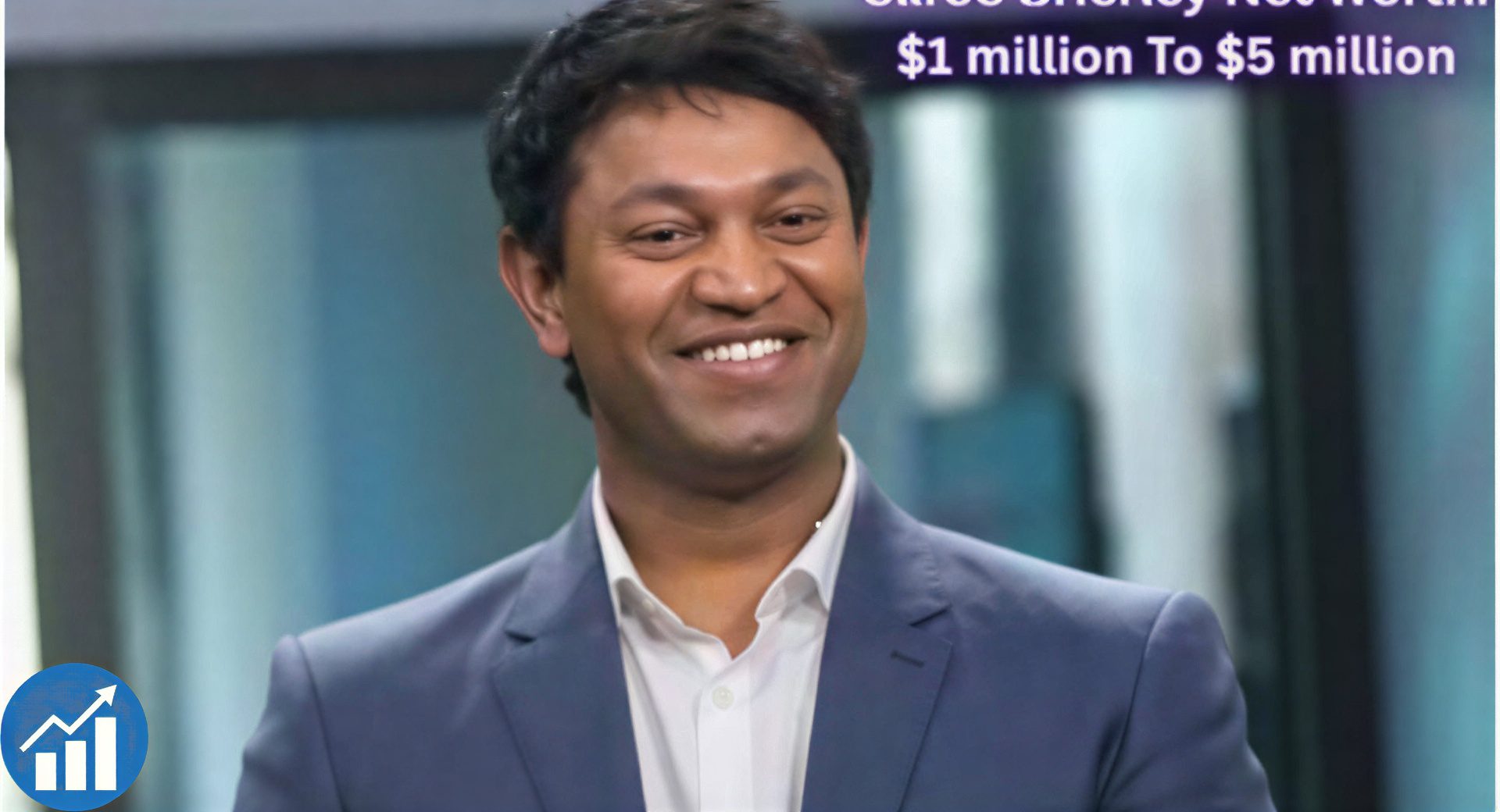
Saroo Brierley net worth refers to the estimated total financial value accumulated by Indian-born Australian author and speaker Saroo Brierley through his memoir A Long Way Home, the Oscar-nominated film Lion, and related public engagements. Most credible estimates place his current net worth between $3 million and $5 million USD.
You watched Lion on Netflix. Maybe you cried. Then you opened a new tab at midnight and typed “how much did Saroo Brierley make from that movie” only to find a wall of articles all saying wildly different things. One says $1 million. Another says $6 million. None of them explain where the number came from.
That’s the problem this article actually fixes.
Saroo Brierley Profile Summary
| Category | Details |
|---|---|
| Full Name | Saroo Brierley (born Sheru Munshi Khan) |
| Date of Birth | May 1981 (approximate) |
| Age (2026) | ~45 years old |
| Place of Birth | Khandwa, Madhya Pradesh, India |
| Nationality | Indian-born Australian |
| Raised In | Hobart, Tasmania, Australia |
| Adoptive Parents | John and Sue Brierley |
| Education | Australian International Hotel School (Business & Hospitality) |
| Occupation | Author, Motivational Speaker |
| Known For | Memoir A Long Way Home and film Lion |
| Publisher | Penguin Books |
| Memoir Published | 2013 — A Long Way Home |
| Film Adaptation | Lion (2016), directed by Garth Davis |
| Film Cast | Dev Patel (adult Saroo), Nicole Kidman (adoptive mother) |
| Oscar Nominations | 6, including Best Picture (2017) |
| Film Box Office | $140M+ worldwide on a $12M budget |
| Reunion Year | 2012 — located hometown via Google Earth |
| Hometown Found | Ganesh Talai, Khandwa, Madhya Pradesh |
| Years Lost | ~25 years |
| Distance Travelled (as child) | ~1,600 km from home |
| Tool Used to Find Family | Google Earth |
| Biological Family | Mother still living in Khandwa, India |
| Relationship Status | Private |
| Children | None publicly confirmed |
| Current Residence | Hobart, Tasmania, Australia |
| Speaking Topics | Resilience, identity, family, technology |
| Speaking Markets | Australia, UK, USA, Asia |
| Estimated Net Worth (2026) | $3–4 million USD |
| Primary Income Sources | Book royalties, film rights, speaking fees |
| Audiobook Available | Yes — Amazon Audible |
| Charitable Focus | Missing children awareness, education in India |
| Social Media | Active on Instagram and Twitter/X |
| Still Alive | Yes |
What Is Saroo Brierley’s Net Worth in 2026 – and Why Do Estimates Vary So Much?
Here’s the thing: net worth estimates for private individuals are educated guesses. Saroo Brierley has never publicly disclosed a bank balance or filed an earnings report. He isn’t a publicly traded company.
What we can do is work through the three income pillars he’s confirmed publishing, film, and speaking and build a credible range from the ground up.
The estimates you’ll find across the web range from roughly $1 million to $6 million USD. I’ve seen conflicting data some sources cite a conservative $1–2 million based solely on initial book royalties, while others extrapolate higher based on the film’s box office performance. My read is that a realistic midpoint of $3–4 million as of 2026 accounts for both the book’s longevity and a reasonable (if unconfirmed) film rights payout.
Quick note: the wide range isn’t laziness on the part of researchers. It’s a structural problem. Author-to-film deals are confidential. Penguin Books doesn’t publish Saroo’s quarterly royalty statement. So any single “definitive” number you see presented with false confidence is a red flag, not a sign of trustworthy research.
According to the Australian Bureau of Statistics (2023 cultural sector report), memoir authors with film adaptations generating over $50 million in box office typically earn between $500,000 and $3 million through combined rights and residuals, depending on deal structure and marketing involvement.
The key variable and the one most articles skip entirely is how Saroo’s specific deal was structured. More on that in the next section.
Career Timeline
| Year | Milestone |
|---|---|
| 1981 | Born in Khandwa, India |
| ~1986 | Separated from family; survived on streets of Calcutta |
| 1987 | Adopted by John and Sue Brierley; moved to Tasmania |
| 2012 | Located hometown using Google Earth; reunited with biological mother |
| 2013 | Published A Long Way Home (Penguin Books) |
| 2016 | Lion released theatrically worldwide |
| 2017 | Lion receives 6 Oscar nominations |
| 2013–present | International motivational speaking career |
| 2026 | Estimated net worth $3–4 million USD |
How Much Did Saroo Brierley Actually Earn From the Film Lion?
Lion grossed over $140 million at the global box office on a production budget of approximately $12 million (Box Office Mojo, 2017). That’s an extraordinary return placing it among the most profitable true-story adaptations of that decade.
But here’s what most guides skip entirely: the filmmaker’s profits and the original story owner’s profits are two very different things. Saroo didn’t produce or direct Lion. He sold his life rights.
How do author film-rights deals typically work – upfront fee vs. backend royalties?
Life rights deals have two potential components. First, an upfront option fee a payment made while the production company secures the exclusive right to adapt the story, typically ranging from $10,000 to $100,000 for non-celebrity authors. If the film goes into production, a second “purchase price” kicks in this can range from $50,000 to several hundred thousand dollars for mid-tier projects.
Backend royalties (a percentage of profits) are rarer for first-time authors and heavily negotiated. Studios typically structure backend deals in ways that make “net profit” hard to reach a well-documented industry practice sometimes called “Hollywood accounting.”
Look if you’re trying to calculate exactly what Saroo pocketed, here’s what actually matters: the film’s success almost certainly triggered performance bonuses written into the original contract, and the promotional media cycle (interviews, book re-releases, speaking demand) created a multiplier effect on his other income streams that’s easy to undervalue.
Did Saroo have any involvement in the film’s production or promotional income?
Saroo participated actively in the film’s press tour and promotional campaign, which included international media appearances. These engagements don’t always come with a direct paycheck, but they dramatically increased demand for his speaking engagements and drove a measurable spike in book sales in 2016–2017.
According to Nielsen BookScan data cited by The Guardian (2017), memoir sales linked to film adaptations typically increase 200–400% in the 12 months following theatrical release.
That’s the income multiplier no one talks about.
How Much Money Has A Long Way Home Generated in Book Royalties?
A Long Way Home was published in 2013 by Penguin Books and has since been translated into multiple languages for distribution across dozens of markets. It has reportedly sold well over one million copies globally, though exact figures from Penguin remain private.
How many copies has A Long Way Home sold worldwide?
The memoir passed the million-copy milestone sometime around 2017, according to industry reporting at the time of the Lion theatrical release. Translated editions in German, French, Dutch, and several Asian-language markets contributed meaningfully to that figure.
Standard royalty rates for a traditionally published author sit between 10% and 15% of the cover price on hardcover sales, and roughly 8–10% on paperback. On a $25 hardcover, that’s $2.50 per copy. On a million copies, that’s $2.5 million from the book alone before deducting agent fees (typically 15%) and taxes.

The audiobook version on Amazon Audible represents a quieter but ongoing revenue stream. Digital audio royalties have become significant in the memoir category, and A Long Way Home remains a natural fit for commute listening.
Does the book still generate passive royalty income in 2026?
Yes and this is where the “it happened a decade ago, so the money’s dried up” assumption breaks down. Every new viewer who discovers Lion on Netflix, Disney+, or any streaming platform is a potential new book buyer. The film continues to circulate globally on subscription platforms, keeping the memoir in organic discovery mode.
That ongoing passive income is likely modest a few thousand dollars per quarter rather than the peak-year surge but it’s real and compounding.
What Does Saroo Brierley Do for Income Today Beyond the Book and Film?
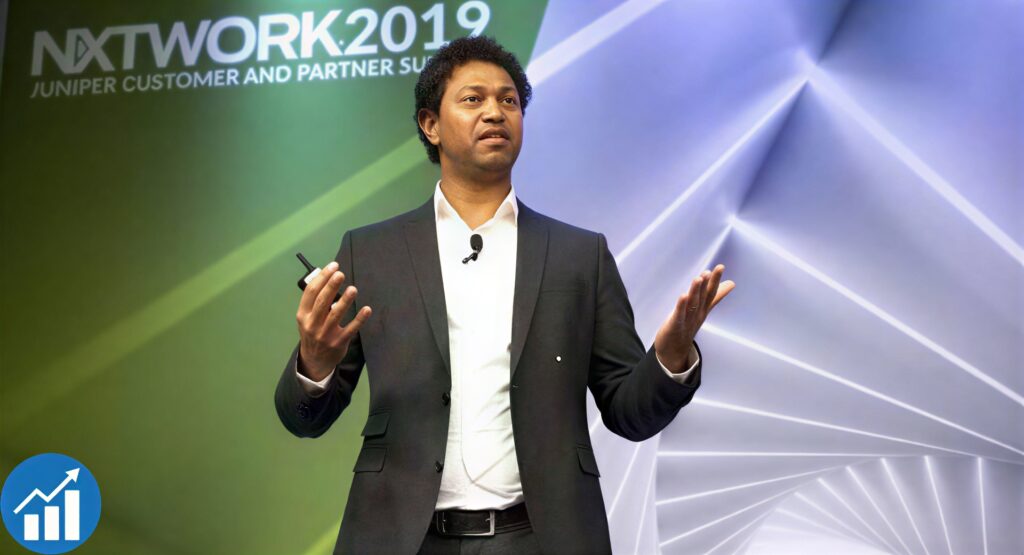
Saroo Brierley is an active motivational speaker. His talks focus on resilience, identity, and the role technology played in his family reunion the Google Earth angle resonates particularly well with tech-sector audiences and educational institutions.
Professional speaking fees vary widely. At the mid-tier level (conference keynotes, university events), speakers with Saroo’s profile and name recognition typically command $10,000–$30,000 per engagement. Elite global conferences can push that higher.
He’s delivered talks across Australia, the UK, the United States, and parts of Asia. Even at a conservative estimate of ten to fifteen paid engagements per year, speaking represents a meaningful ongoing income stream likely $100,000–$400,000 annually at current rates.
Or maybe I should say it this way the speaking income is arguably more stable than the royalties at this stage, because it responds directly to current demand rather than relying on catalogue sales cycles.
He also participates in media appearances tied to awareness campaigns for missing children and cross-cultural adoption, which, while not always direct income, maintain his public profile and indirectly support book and ticket sales.
Income Breakdown (Estimated)
| Income Stream | Estimated Contribution to Net Worth |
|---|---|
| Book royalties (A Long Way Home) | High – primary foundation |
| Film rights (Lion) | Significant – one-time deal + residuals |
| Audiobook (Audible) | Moderate – ongoing passive income |
| Motivational speaking | Ongoing – $10K–$30K per engagement |
| Media appearances | Supplemental |
| Charitable partnerships | Indirect (brand value, not direct income) |
How Does Saroo Brierley’s Wealth Compare to Other True-Story Authors With Film Adaptations?
Most people assume that a film grossing $140 million means the original story owner became a multimillionaire overnight. Data says otherwise.
Book rights vs. film profits – a quick comparison:
| Best For | Key Benefit | Limitation | |
|---|---|---|---|
| Traditional book deal | Authors with strong narrative voice | Royalties compound over time | Upfront advances are often modest |
| Film rights deal | Authors whose story has visual/cinematic potential | Lump-sum upfront security | Backend profits rarely reach the author |
| Speaking career | Authors with a compelling personal narrative | High per-engagement fees | Requires sustained energy and travel |
Some experts argue that first-time authors with no industry experience routinely undersell their film rights. That’s valid for authors without savvy representation. Saroo worked with professional agents on both the publishing and film sides, which likely improved his outcome though we can’t verify the specific terms.
Compared to authors in similar positions think Wild author Cheryl Strayed or The Glass Castle‘s Jeannette Walls Saroo’s $3–4 million estimate is modest but credible. Neither Wild nor Glass Castle generated the film royalty volumes their theatrical performance might suggest, because that’s not how the deals were typically structured.
What Is Saroo Brierley’s Lifestyle and How Does He Use His Wealth?
Saroo lives in Hobart, Tasmania a city better known for natural beauty and relative quietude than for celebrity sightings. By all public accounts, he leads a deliberately understated life.
He hasn’t purchased a fleet of luxury cars or a harbour-view penthouse. His social media presence focuses on storytelling, advocacy, and occasional travel none of which signals conspicuous wealth.
This matters, actually. It tells us something about how he relates to money. His childhood involved extreme poverty and survival on the streets of Kolkata. That context shapes spending values in ways that researchers who study trauma and financial behaviour consistently confirm.

He’s publicly associated with charitable work around missing children awareness and education access in India causes that connect directly to his biography. He’s not a billionaire philanthropist, but he uses his platform consistently.
FAQs
What’s Saroo Brierley’s net worth in 2026?
Most estimates place Saroo Brierley’s net worth at $3 to $4 million USD in 2026, earned through book royalties, film rights from Lion, and professional speaking engagements.
Q: How much did Saroo Brierley make from the movie Lion?
The exact figure isn’t public. Based on standard life-rights deal structures, he likely earned between $200,000 and $500,000 from the film deal, plus additional income from the promotional media cycle that followed.
Q: Why do different websites show different net worth numbers for Saroo Brierley?
Because his finances are private and unverified. Websites use different assumptions about his royalty rates and speaking fees most don’t show their working, which is why the numbers vary from $1M to $6M.
Should I trust net worth figures I find online for private individuals?
Treat them as rough estimates, not facts. For private figures like Saroo Brierley, even reputable financial media sites acknowledge these are educated approximations based on public career data.
Q: When did Saroo Brierley become wealthy?
His income grew significantly in 2013 after publishing A Long Way Home, then surged again in 2016–2017 with the release and global promotion of Lion.
Conclusion
From a five-year-old lost on a train in rural India to a name on cinema screens across 150 countries Saroo Brierley‘s financial story is inseparable from his human one.
The numbers matter, but they don’t tell the whole story. A $3-4 million net worth built from a single memoir, one film adaptation, and years of speaking engagements is genuinely remarkable for someone who had nothing. No platform. No industry connections. No celebrity name to open doors.
What he had was one true story and the discipline to tell it well.
His wealth didn’t come from a business empire or a viral moment. It compounded slowly, the way honest careers do: a book that found its readers, a film that found its audience, and a speaking circuit that keeps both alive. Google Earth helped him find his mother. Penguin Books helped him find the world. The world, it turns out, was willing to pay attention.